
Divorce Made Easier.
A simpler, faster way to get divorced in New York.
When you and your spouse agree, getting divorced shouldn’t be complicated.
Express Divorce makes the uncontested divorce process easier — with straightforward steps, clear pricing, and the experience of a New York matrimonial law firm behind you.
See if you qualify in just a few minutes.
10 Things to Know Before Starting a Divorce in New York
Starting a divorce can feel complicated, but understanding the process before you file can make the decisions ahead much clearer. In New York, questions about residency, property, support, children, and court procedure can all affect how a divorce moves forward.For couples who are able to reach agreement, an uncontested divorce may offer a more streamlined path. But “uncontested” does not mean that there are no important decisions to make—it means the issues that apply to the marriage have been resolved.


Here are ten things to understand before starting a divorce in New York.
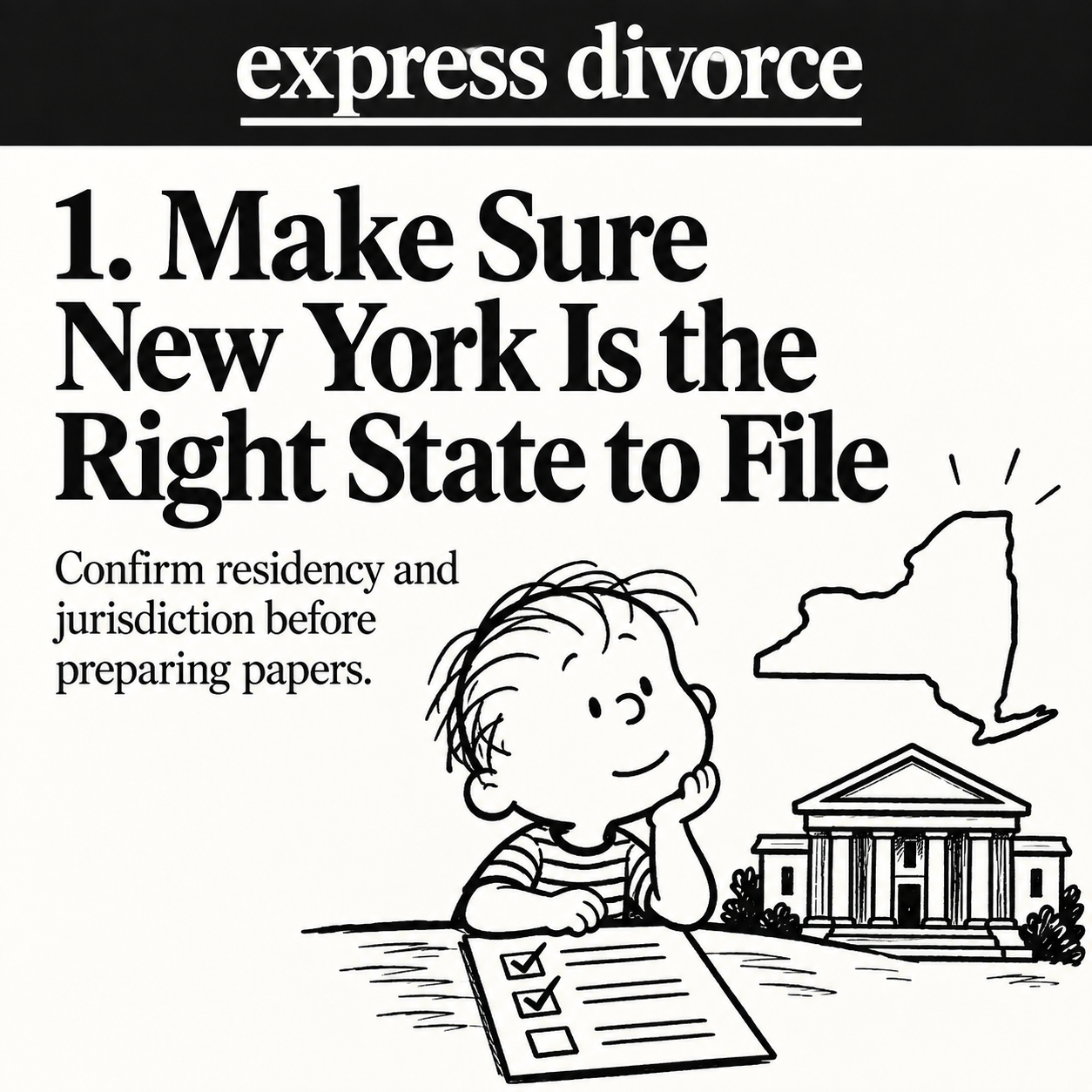
1. Make Sure New York Is the Right State to File
Before preparing divorce papers, confirm that New York has jurisdiction over your divorce.
New York has several different residency pathways. Depending on the circumstances, a spouse may need one or two years of continuous New York residence, or the marriage, marital residence, or grounds for divorce may need a sufficient connection to the state.
If you recently moved, your spouse lives in another state or country, or your marriage has connections to more than one jurisdiction, this should be considered before filing.
Key takeaway: Confirm jurisdiction first. Preparing the wrong case in the wrong state can create unnecessary delay and expense.
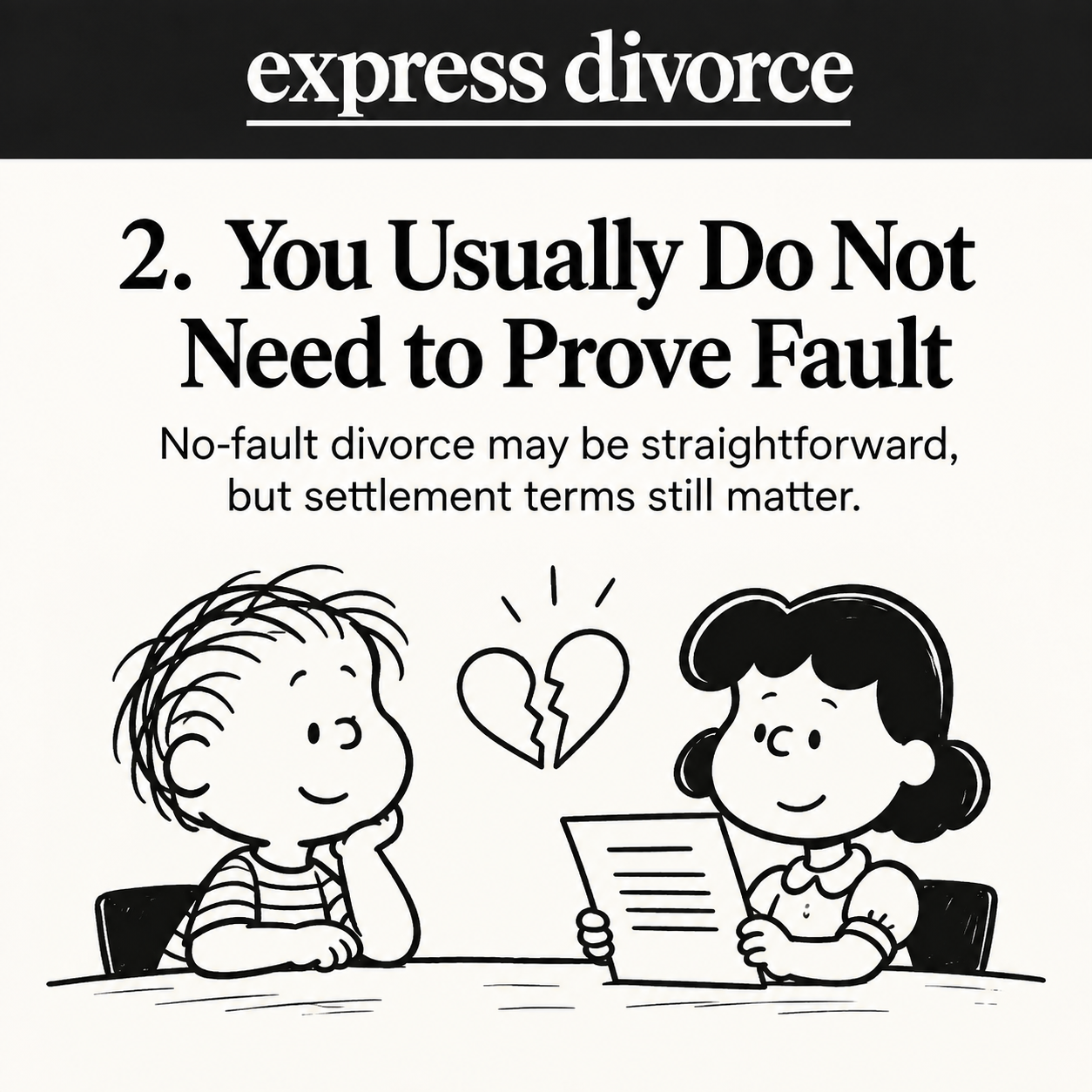
2. You Usually Do Not Need to Prove That Someone Was at Fault
New York permits divorce based on the irretrievable breakdown of the marriage for at least six months. New York still recognizes other statutory grounds, but many divorces proceed on the no-fault ground.
The existence of a no-fault ground does not eliminate the need to resolve the financial and parenting issues that apply to the case.
For many couples, the more significant work involves deciding the terms of the divorce rather than proving why the marriage ended.
Key takeaway: The legal ground for divorce may be straightforward. The settlement terms often require more attention.
3. Decide Whether Your Divorce Is Truly Uncontested
An uncontested divorce involves agreement on the issues that must be resolved before the marriage can be legally ended.
Depending on your circumstances, those issues may include:
division of property and debt;
spousal maintenance;
custody and parenting time;
child support; and
other financial obligations.
New York Courts describes an uncontested divorce as one in which the spouses agree on the divorce and the related financial and, where applicable, parenting issues.
If important issues remain unresolved, mediation, negotiation, or attorney assistance may be appropriate before attempting to complete an uncontested filing.
Key takeaway: Agreement—not the absence of assets, children, or financial issues—is what makes a divorce uncontested.
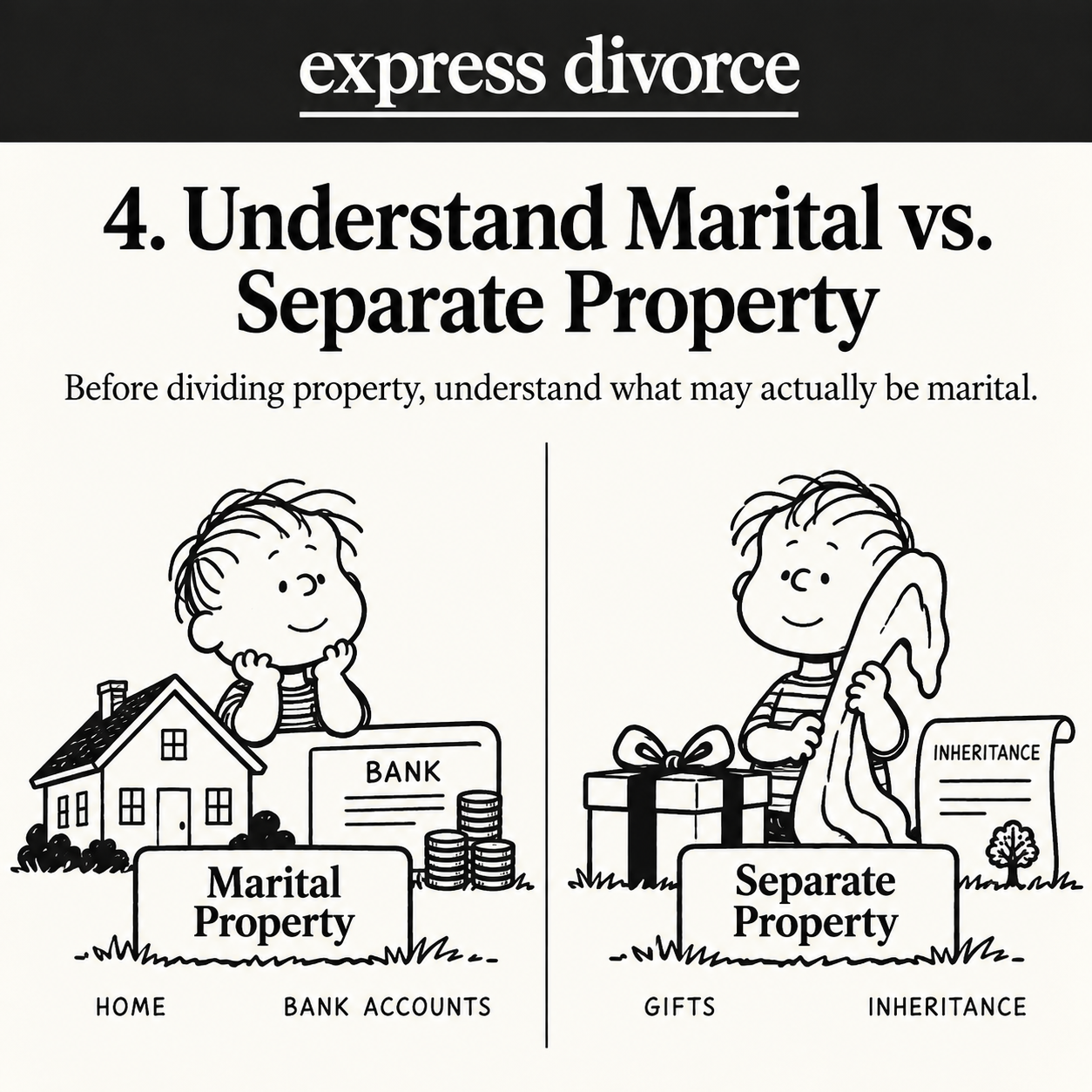
4. Understand What Is Marital Property and What May Be Separate
New York is an equitable distribution state.
That does not mean every marital asset must be divided equally. New York law provides that marital property is distributed equitably after considering the circumstances of the parties, while separate property generally remains separate.
Before negotiating a settlement, identify the assets and debts that may be involved, including:
real estate;
bank and investment accounts;
retirement accounts and pensions;
businesses and professional interests;
vehicles and valuable personal property; and
loans, mortgages, credit cards, and other liabilities.
Property acquired before the marriage, inheritances, certain gifts, and other property may have a separate-property component, but classification can become more complicated when assets have been commingled, transferred, improved, or appreciated during the marriage.
Key takeaway: Before deciding how to divide property, determine what property is actually marital.
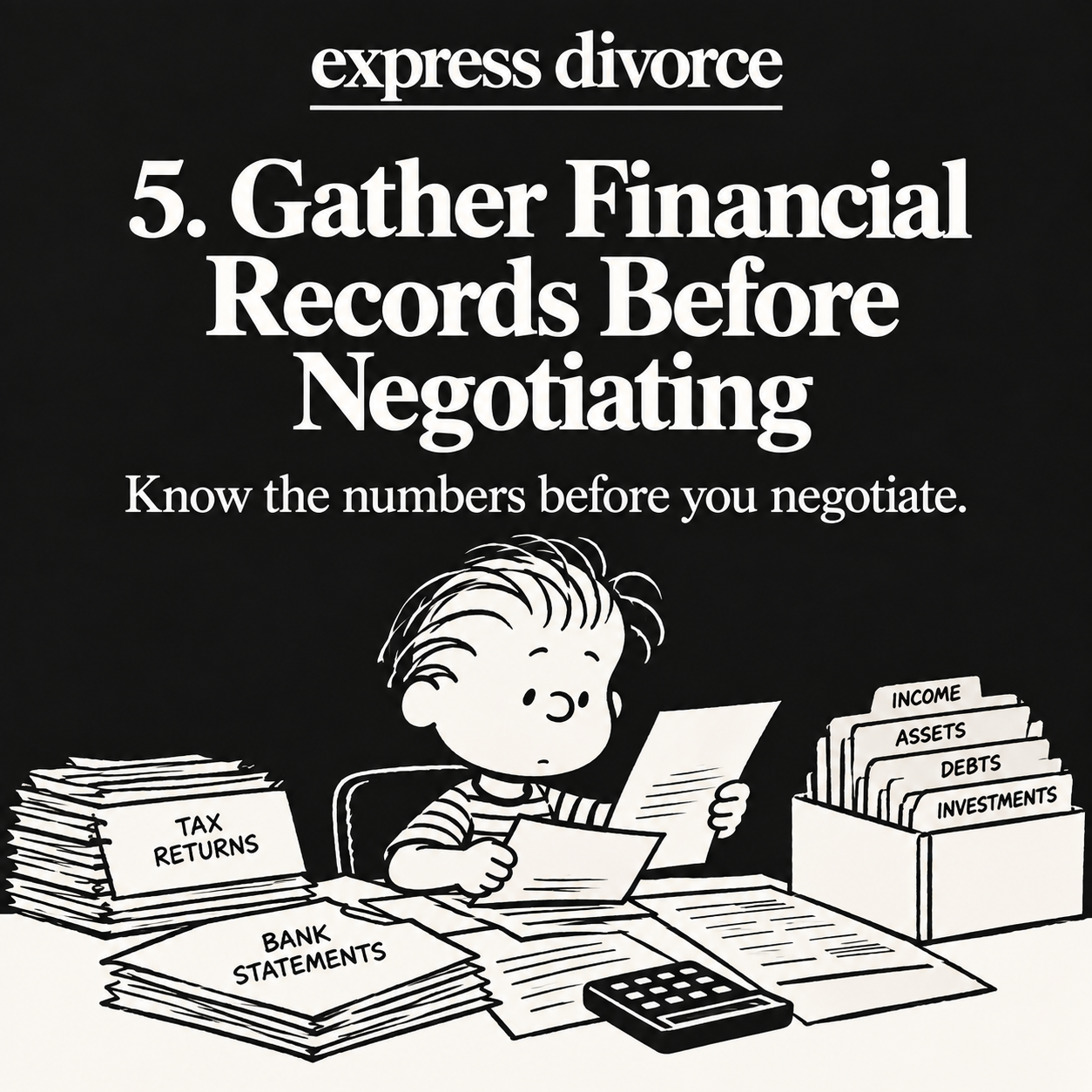
5. Gather Your Financial Records Before Negotiating
A meaningful settlement requires reliable financial information.
Before making decisions, gather documents that help show the complete financial picture, such as:
tax returns;
recent pay statements;
bank statements;
investment statements;
retirement-account statements;
mortgage and loan balances;
credit-card statements;
business records, if applicable; and
documents showing when and how major assets were acquired.
New York law requires compulsory financial disclosure in matrimonial cases when maintenance or support is at issue.
Even in an agreed divorce, understanding the finances before signing an agreement can help prevent decisions based on incomplete information.
Key takeaway: Know the numbers before you negotiate.
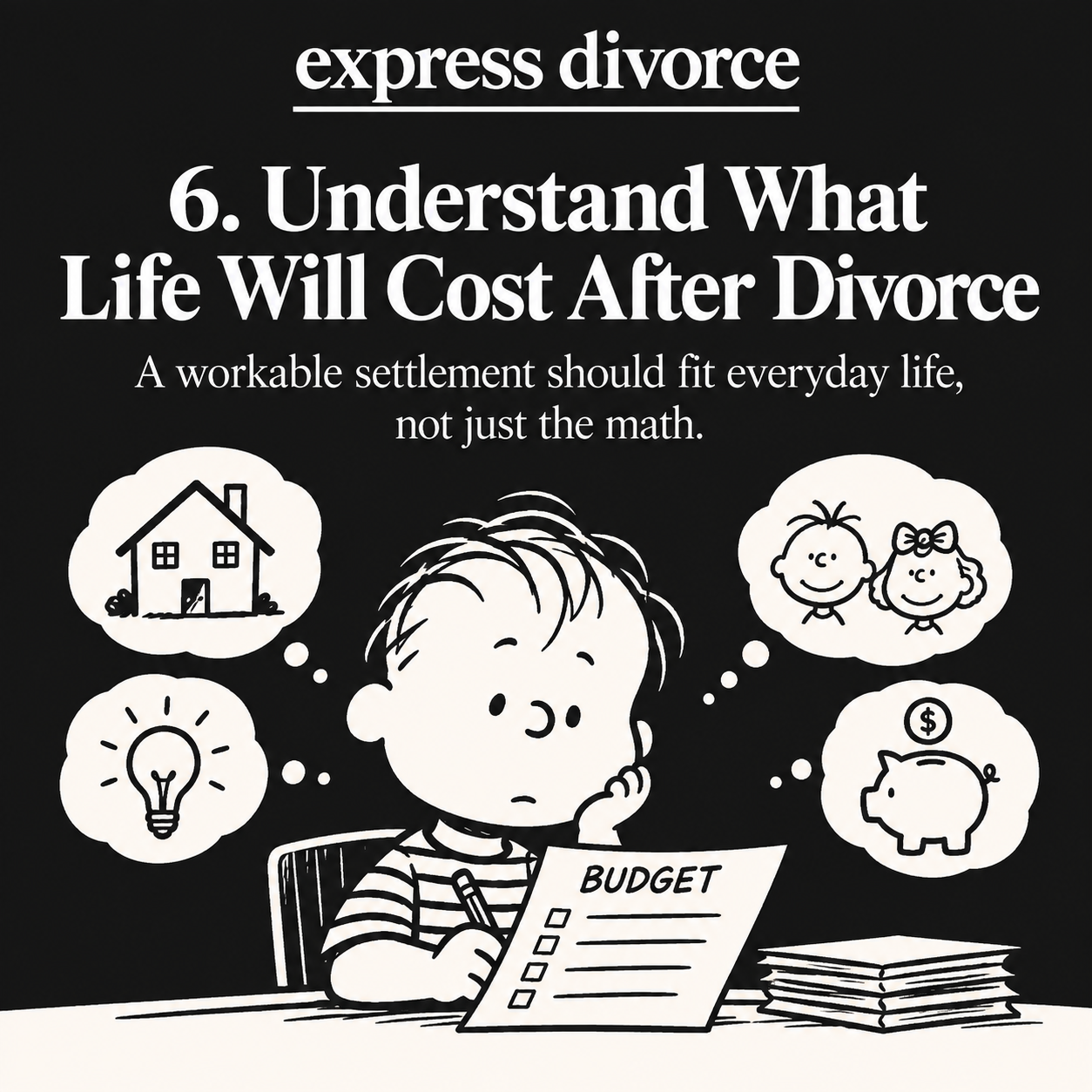
6. Understand What Your Life Will Cost After Divorce
Divorce planning should address more than the value of the assets being divided.
Prepare a realistic monthly budget based on the household you expect to maintain after separation. Consider:
housing and utilities;
insurance;
transportation;
food;
childcare;
medical expenses;
children’s activities;
debt payments;
savings; and
retirement contributions.
A budget can help you evaluate whether a proposed settlement is workable—not merely whether it looks balanced on paper.
It can also provide useful context when considering maintenance, child support, the marital home, or responsibility for particular debts.
Key takeaway: A settlement should work in everyday life, not just mathematically.
7. Think Carefully Before Deciding What Happens to the Marital Home
The marital residence is often one of the largest assets in a divorce, and sometimes one of the most emotional.
But the decision to keep the home should also be evaluated financially.
Consider questions such as:
What is the current equity?
Is there a mortgage or home-equity loan?
Can one spouse refinance?
Who will be responsible for the mortgage before and after the divorce?
What are the property taxes and insurance costs?
What will ongoing maintenance and repairs cost?
Would selling the property provide greater financial flexibility?
New York’s equitable-distribution statute specifically allows the court to consider the need of a custodial parent to occupy or own the marital residence, along with many other factors.
Key takeaway: Keeping the house is not simply an emotional decision. It must also be financially sustainable.
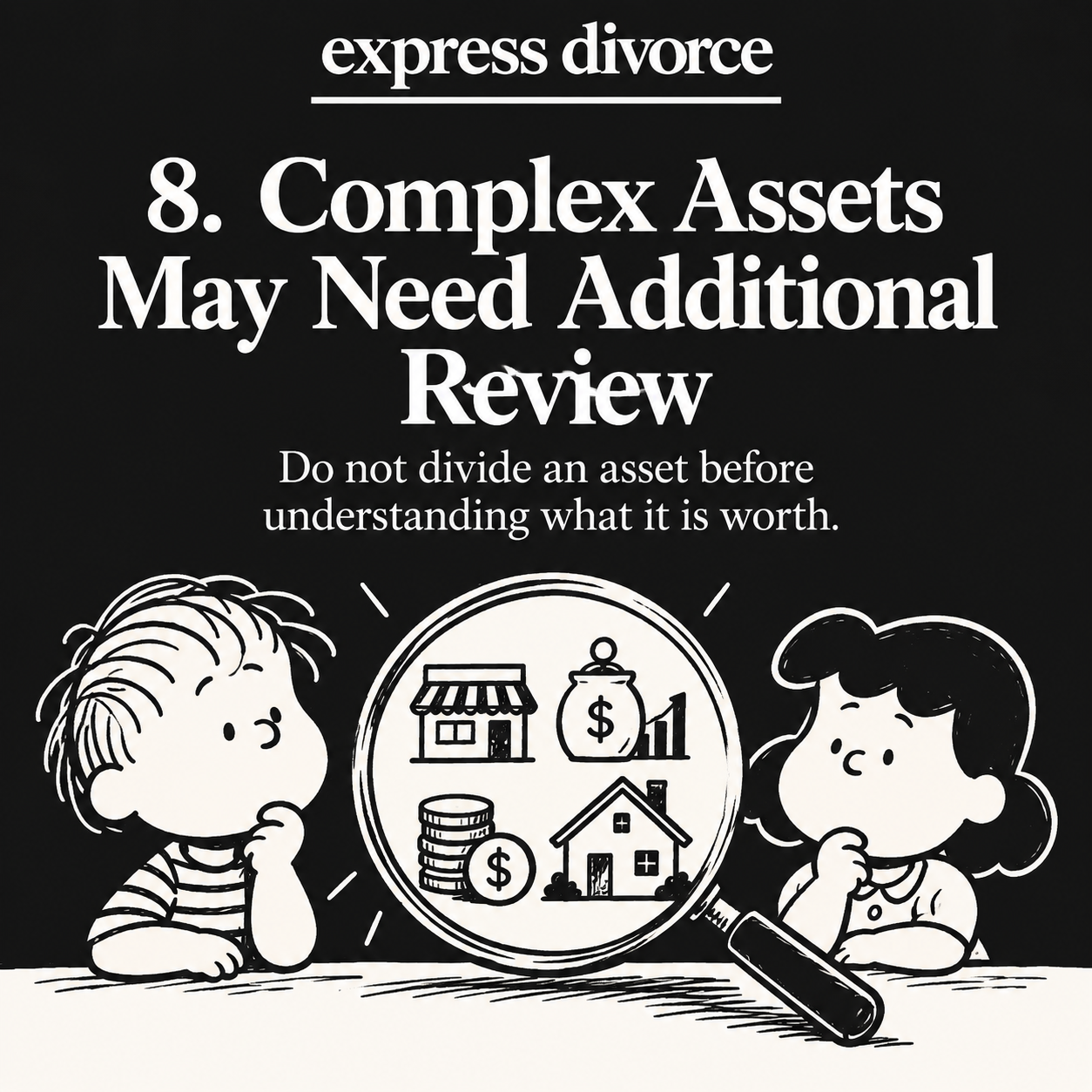
8. Complex Assets May Require Additional Review
Some assets cannot be responsibly evaluated by looking at a single account balance.
A closer review may be appropriate when the marriage involves:
business ownership;
professional practices;
retirement plans;
pensions;
stock compensation;
deferred compensation;
investment interests;
complex real estate holdings; or
other difficult-to-value assets.
New York law expressly recognizes that valuing a business, corporation, profession, or other component asset can sometimes be difficult, and that retaining an asset intact may have economic significance.
Depending on the circumstances, an accountant, valuation professional, financial adviser, or matrimonial attorney may be useful.
Key takeaway: Do not agree to divide or waive an asset before understanding what it is and what it may be worth.
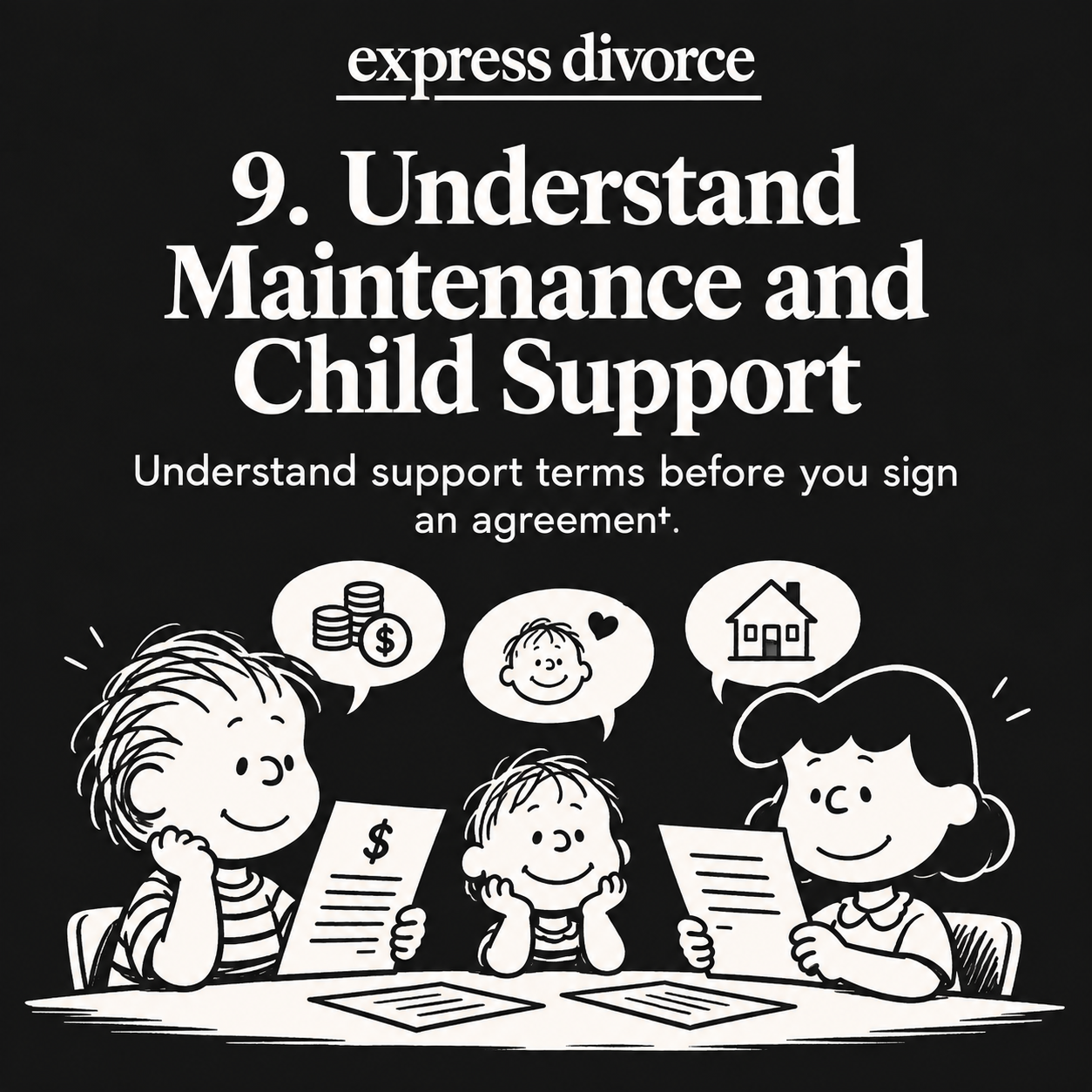
9. Understand Maintenance and Child Support Before You Sign
Support obligations can affect both households long after the divorce papers are signed.
New York has statutory frameworks governing spousal maintenance and child support. Maintenance involves statutory formulas and additional factors, while child support is governed by the Child Support Standards Act and may also include certain child-related expenses.
If children are involved, custody and parenting-time arrangements should also be addressed. New York courts determine custody matters based on the child’s best interests.
Before finalizing an agreement, understand:
whether maintenance applies;
how support was calculated;
how long an obligation may continue;
which parent will pay child support;
how childcare and unreimbursed medical expenses will be allocated; and
whether any other child-related expenses are being addressed separately.
Key takeaway: Understand the support provisions before you agree to them—not after.
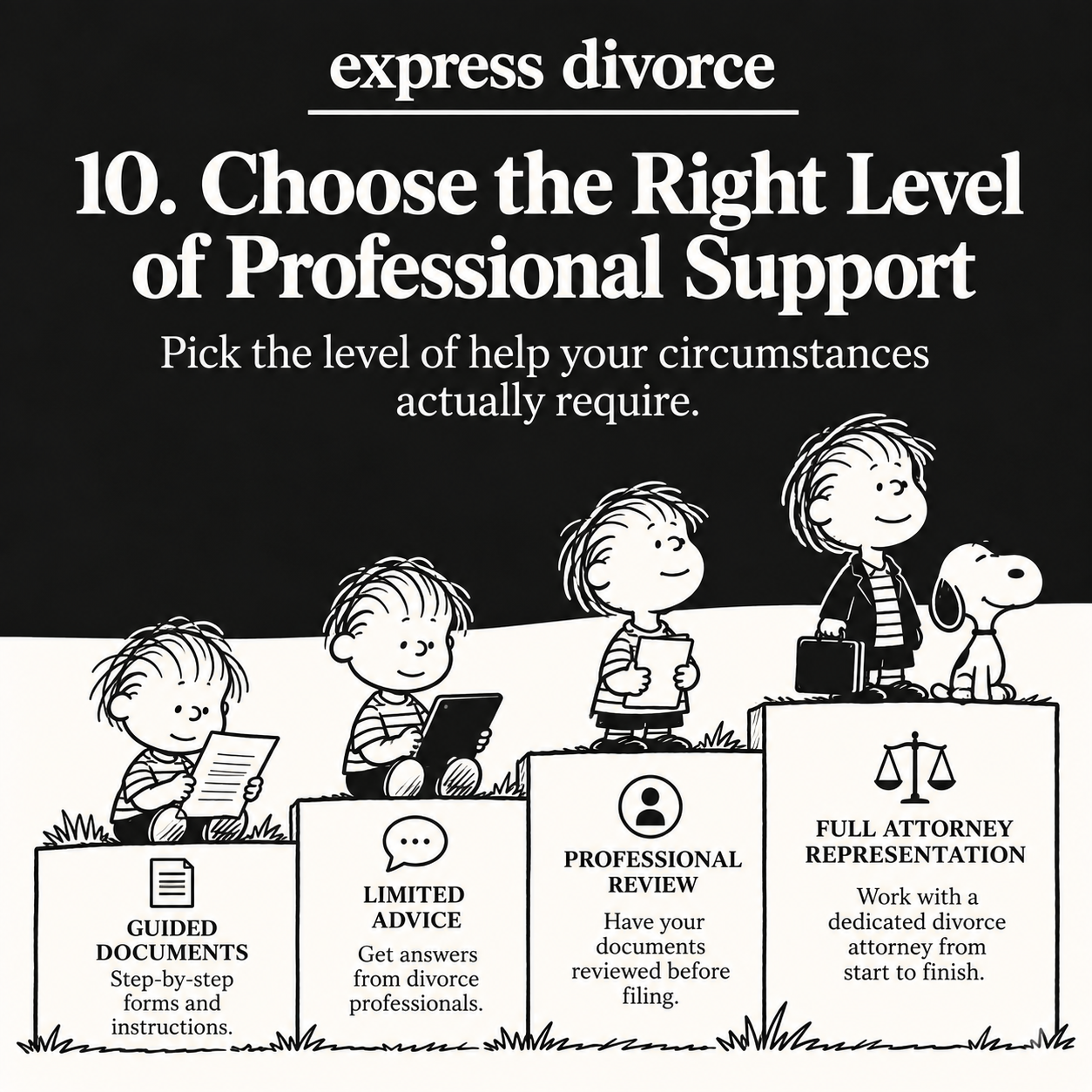
10. Choose the Level of Professional Support That Fits Your Divorce
Not every uncontested divorce requires the same amount of help.
Some couples have already resolved everything and primarily need properly prepared divorce documents. Others want help managing the filing process. Some need an attorney to review the agreement before they sign, and others prefer an attorney to handle the entire uncontested divorce.
Express Divorce offers several levels of support for qualifying New York matters:
Express Divorce — $799
Guided divorce documents and filing instructions.
Express Divorce Plus — $1,999
Document preparation, dedicated paralegal support, filing assistance, signature coordination, and case tracking.
Attorney Review — $2,999
Attorney review for qualifying uncontested cases without minor children.
Family Package — $4,999
Attorney-supported review for qualifying uncontested divorces involving children.
Premium Flat Fee Divorce — $6,999–$7,999
Full attorney representation for a qualifying uncontested divorce.
Court fees, process service, third-party expenses, contested proceedings, and work outside the selected package may be additional.
Key takeaway: The goal is to choose the level of legal support your circumstances actually require.
Final Thoughts
Preparing for divorce does not mean predicting every issue that may arise. It means understanding the decisions that need to be made before committing to a legal and financial outcome.
Confirm that New York is the correct jurisdiction. Identify what has already been agreed. Understand the assets, debts, support obligations, and parenting issues that apply to your family. Gather the financial information you need, and consider whether the proposed settlement will remain workable after the divorce is complete.
For couples who are already in agreement, New York’s uncontested divorce process may provide a more straightforward route through Supreme Court. Where significant issues remain unresolved, addressing them before filing can help determine the appropriate next step.
Ready to Understand Your Options?
Answer a few questions about your divorce and see which level of Express Divorce support may fit your situation.
Get Started