
Divorce Made Easier.
A simpler, faster way to get divorced in New York.
When you and your spouse agree, getting divorced shouldn’t be complicated.
Express Divorce makes the uncontested divorce process easier — with straightforward steps, clear pricing, and the experience of a New York matrimonial law firm behind you.
See if you qualify in just a few minutes.
Three Communication Strategies for a Smoother Start to Divorce in New York
The early stages of divorce can feel especially difficult because legal, financial, and personal decisions often arrive at the same time.
Good communication will not resolve every issue, but it can help reduce unnecessary conflict, clarify priorities, and make it easier to determine whether you and your spouse may be able to reach an uncontested resolution.
For couples considering divorce in New York, these three communication strategies can provide a more structured way to approach the conversations ahead.



1. Treat the Divorce Like a Business Decision
Divorce is personal, but many of the decisions that must be made are practical.
Property, debt, support, housing, parenting arrangements, insurance, and court filings all require clear decisions. Approaching these issues methodically can help prevent every disagreement from becoming an emotional argument.
That does not mean ignoring how you feel. It means separating emotional processing from legal and financial decision-making whenever possible.
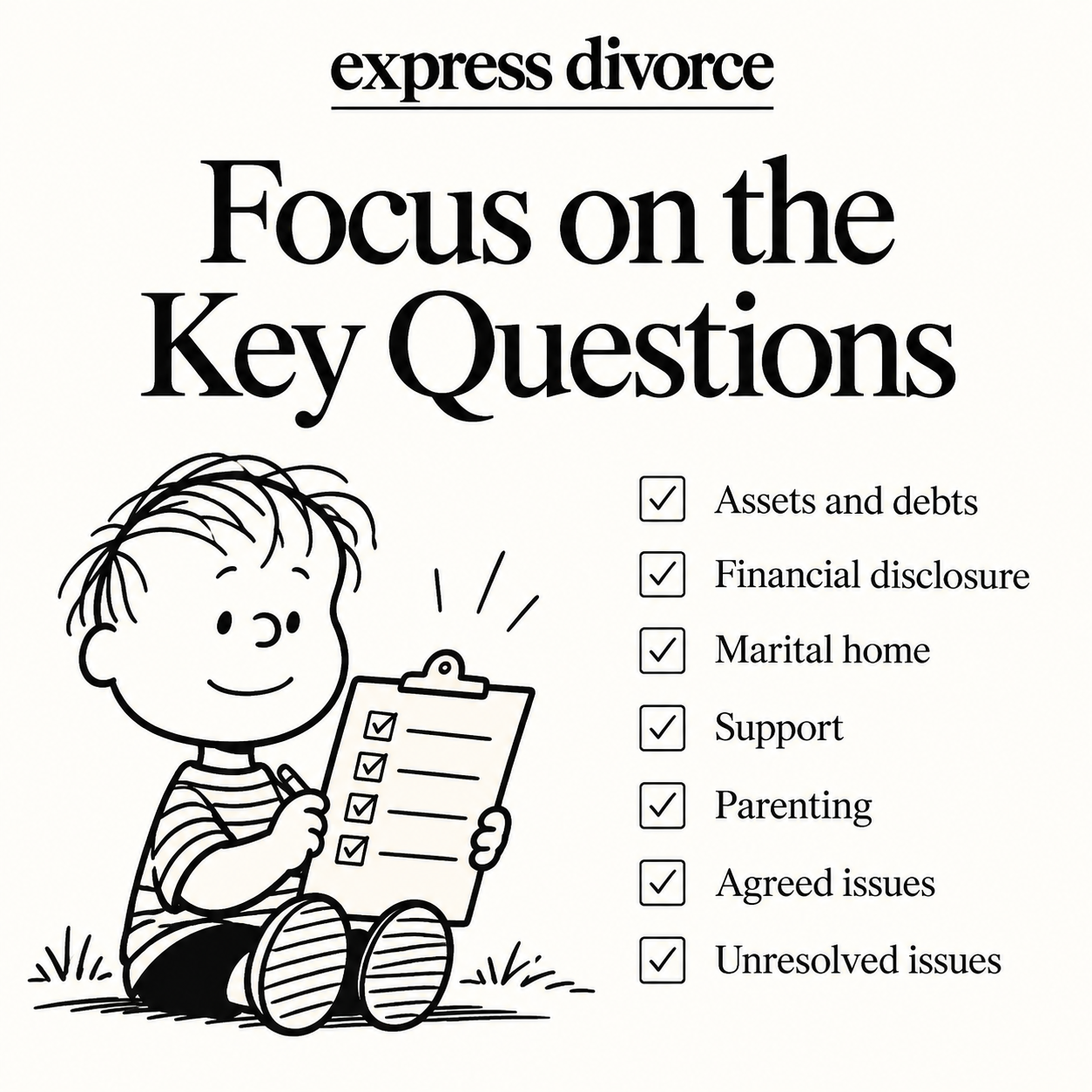
Start by focusing on concrete questions such as:
What assets and debts need to be addressed?
What financial information still needs to be exchanged?
What will happen to the marital residence?
Will maintenance or child support be involved?
If you have children, what parenting arrangements need to be resolved?
Which issues are already agreed?
Which issues still require negotiation?
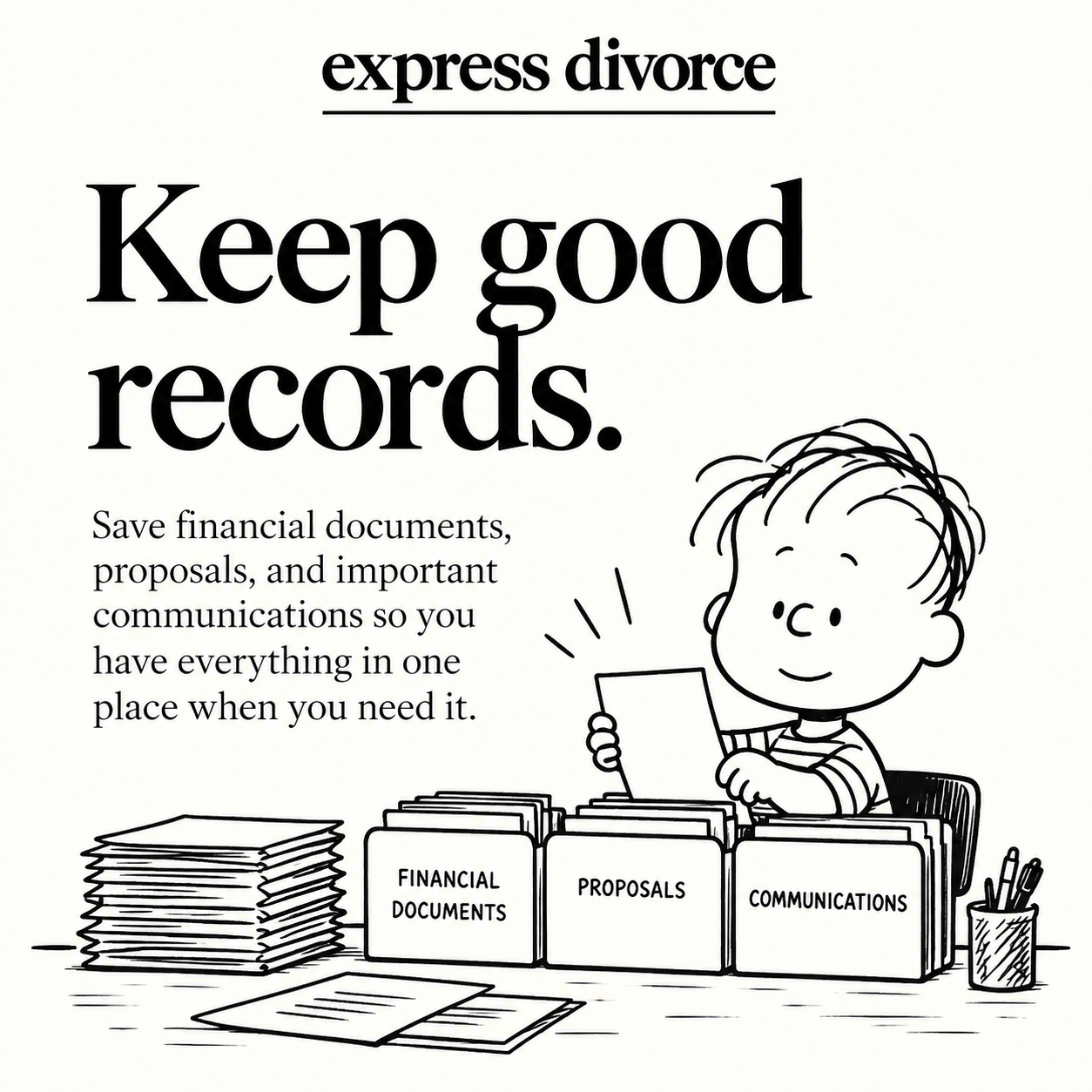
Keeping good records can also help. Save important financial documents, written proposals, significant communications, and information about agreements already reached.
New York considers a divorce uncontested when the spouses agree on the divorce and the financial and parenting issues that apply to their case.
Keep the Long-Term Goal in View
When a discussion becomes difficult, ask whether the issue will matter to your life after the divorce is complete.
A useful settlement should address the practical future—not simply resolve today’s argument.
Key takeaway: Make decisions based on the outcome you need, not the emotion of the moment.
2. Use the “Mirror Test”: Look at Your Own Communication First
It is easy during divorce to focus entirely on what the other spouse is doing wrong.
Before sending an email, text, or response, consider your own part in the interaction.
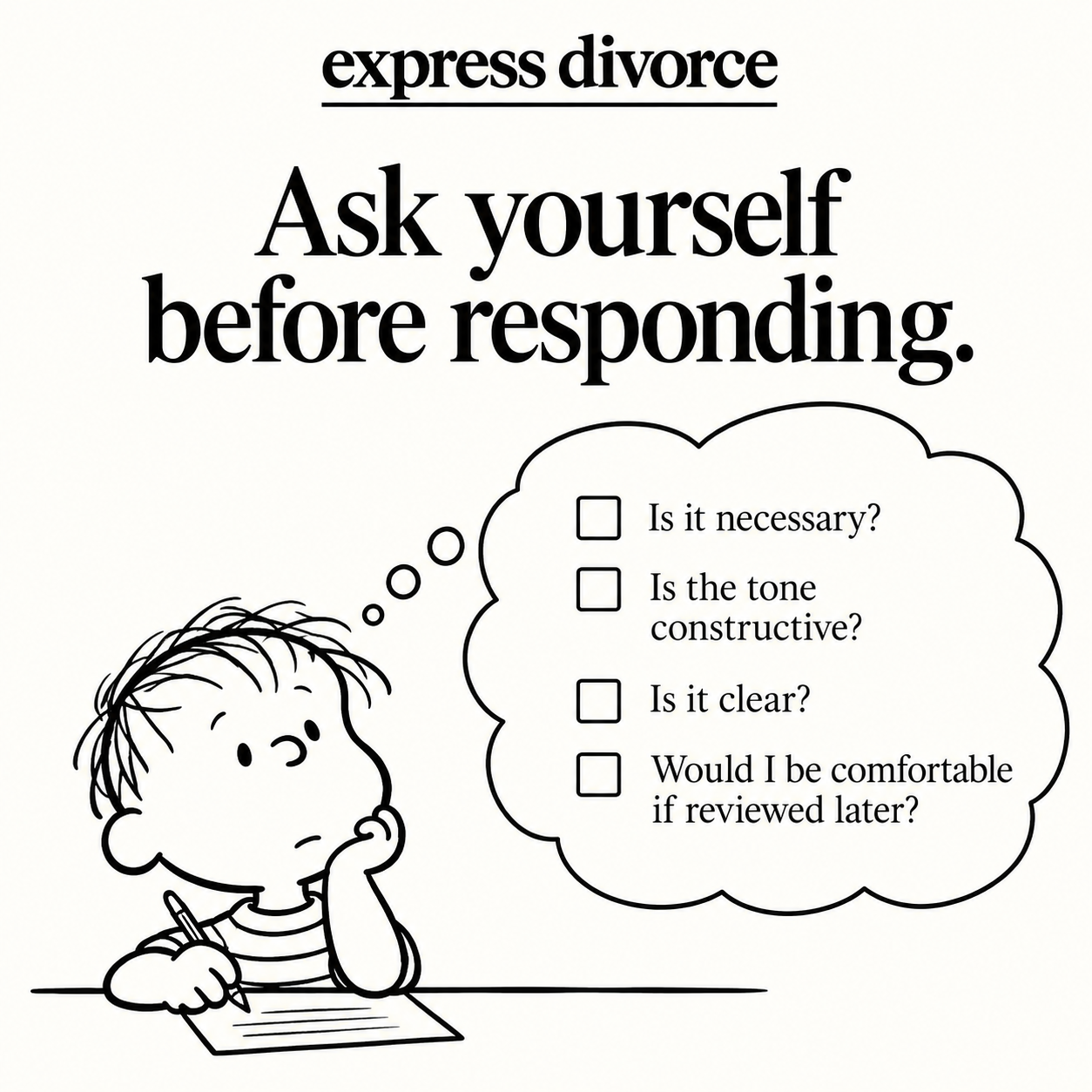
Ask yourself:
Am I responding to the actual issue, or reacting emotionally?
Is this message necessary?
Is the tone likely to move the discussion forward?
Am I making a clear request?
Am I introducing unrelated grievances?
Would I be comfortable having this communication reviewed later by an attorney or court?
This kind of self-assessment does not mean accepting responsibility for another person’s conduct. It means controlling the part of the interaction that you can control.
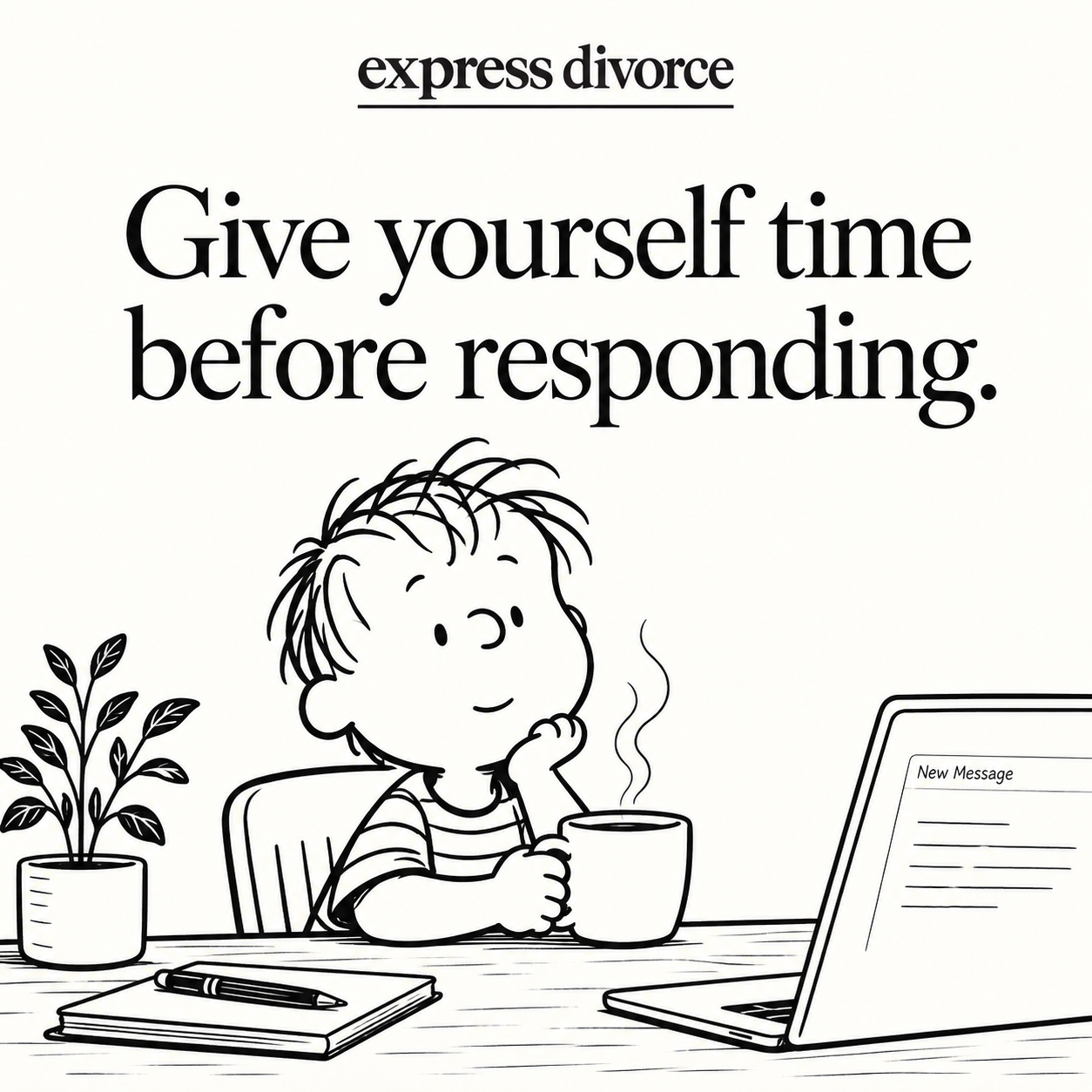
Give Yourself Time Before Responding
Not every message requires an immediate answer.
When there is no emergency or deadline, waiting until you can respond clearly may produce a better result than replying while angry or distressed.
Writing a draft and reviewing it later can be useful. Some people also benefit from discussing difficult communications with a therapist, trusted adviser, mediator, or attorney before responding.
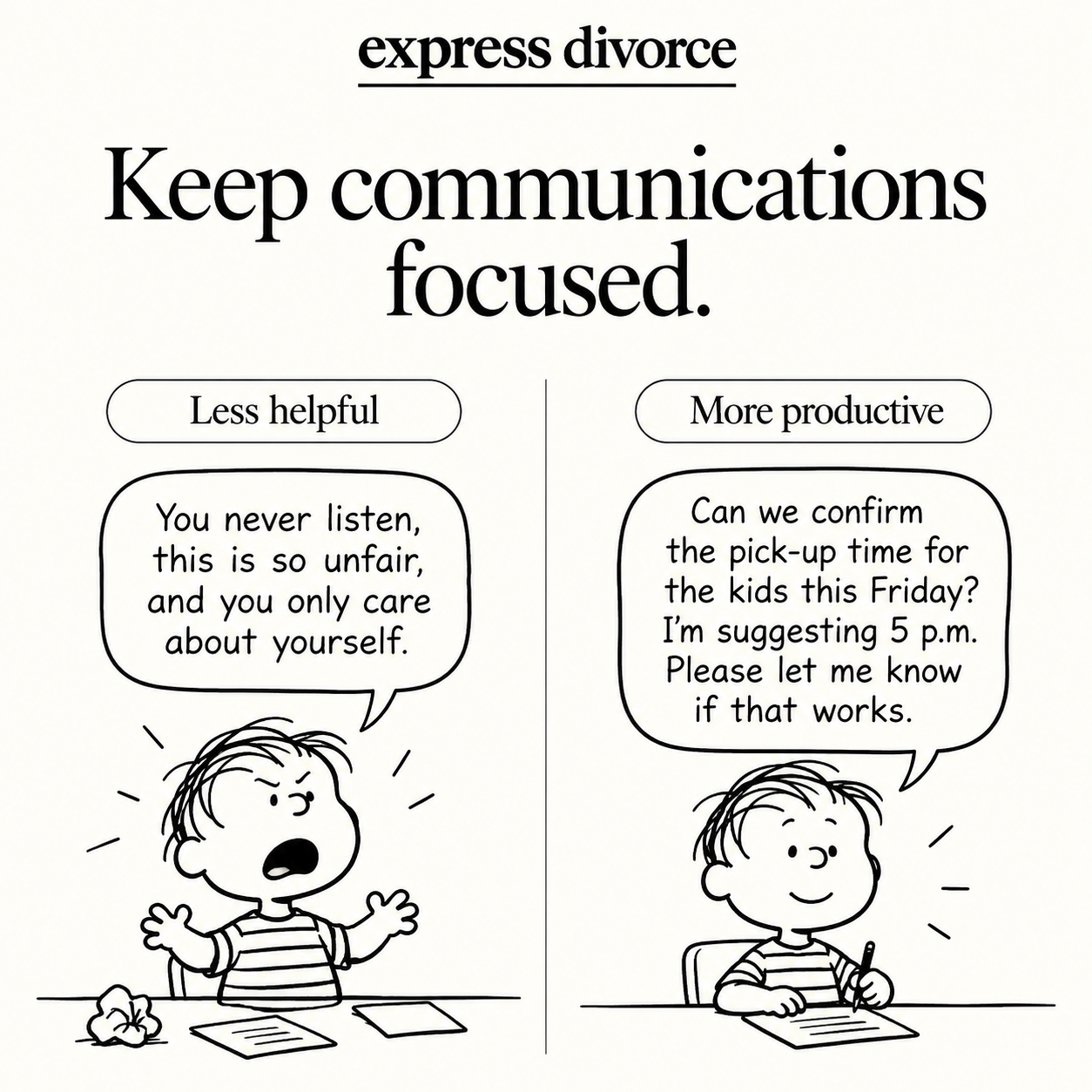
Keep Communications Focused
Instead of:
“You never cooperate and you always make everything impossible.”
A more productive message might be:
“I would like to resolve the children’s holiday schedule. Can we agree on Thanksgiving and winter break by Friday?”
The second version identifies the problem, the requested action, and a reasonable next step.
Key takeaway: You cannot control every interaction, but you can control how clearly and deliberately you communicate.
3. Be Strategic About What You Say—and Who Needs to Hear It
Divorce can quickly become a topic of conversation among relatives, friends, coworkers, neighbors, and social media contacts.
You do not need to explain your divorce to everyone.
Decide in advance:
who actually needs to know;
what information they need;
which matters should remain private;
how you will respond to questions; and
whether you and your spouse can agree on what will be communicated to children or other family members.
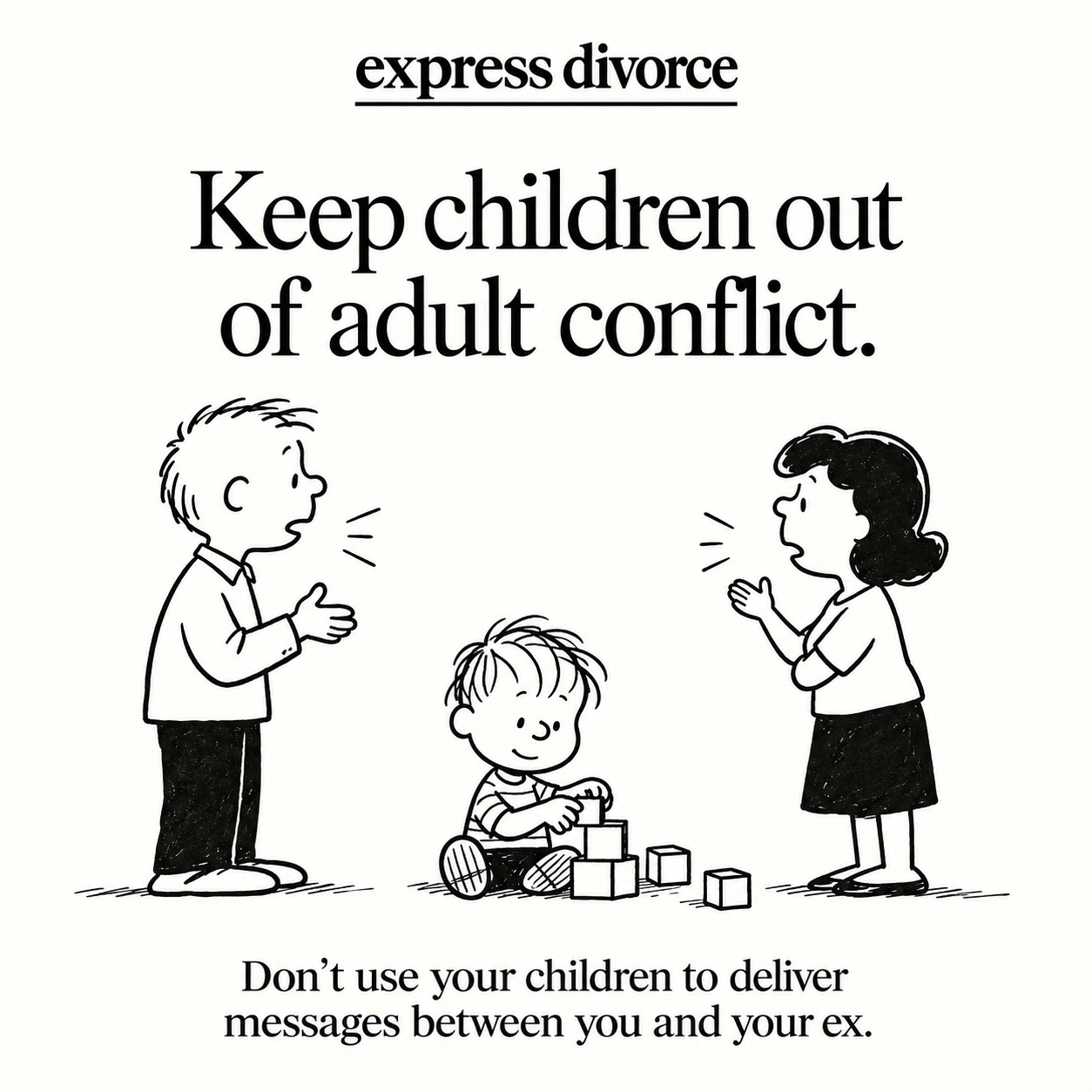
Keep Children Out of Adult Conflict
When children are involved, communication becomes especially important.
Parents should consider how they will discuss the separation with the children, how schedule changes will be explained, and how important information about school, medical care, and activities will be shared.
New York custody and parenting matters are determined according to the child’s best interests, and parenting arrangements are among the issues that must be resolved for an uncontested divorce involving children.
Avoid using children to deliver messages, gather information, or communicate disagreements between parents.
Be Careful With Social Media
A divorce does not need a public narrative.
Before posting, consider whether the content could increase conflict, affect negotiations, embarrass your children, or create an unnecessary record of something said in frustration.
Privacy is often more useful than public explanation.
Set Boundaries With Other People
You can respond simply:
“We’re working through things privately and focusing on the next steps.”
You do not owe friends, relatives, or colleagues a detailed explanation of the marriage.
Key takeaway: Thoughtful communication is often as much about what you choose not to say as what you do say.
When Direct Communication Is Not Appropriate
These strategies assume that communication is reasonably safe and voluntary.
Direct communication, joint negotiation, or mediation may not be appropriate where there is domestic violence, intimidation, coercive control, child abuse, or another serious safety concern. New York Courts specifically notes that alternative dispute resolution may not be appropriate in some cases involving domestic violence or child abuse.
In those circumstances, communication may need to occur through attorneys, court procedures, or other structured channels.
Communication Can Help Determine Whether an Uncontested Divorce Is Possible
Good communication does not automatically make a divorce uncontested.
The underlying issues still need to be resolved.
In New York, spouses seeking an uncontested divorce generally need agreement concerning the financial and parenting matters that apply to their case, including property, debt, maintenance, custody, and child support where relevant.
If you are close to agreement but still have several issues to resolve, mediation or attorney-assisted negotiation may help. New York Courts identifies mediation and collaborative law as possible alternatives when spouses believe they may be able to reach agreement with assistance.
Once agreement is reached, important terms should be documented carefully. New York law imposes formal requirements on matrimonial agreements, including that qualifying agreements be written, signed, and properly acknowledged.
Final Thoughts
A smoother start to divorce often comes from creating structure around difficult conversations.
Focus first on the practical decisions that need to be made. Consider your own communication before responding. Be deliberate about what you tell other people and what you keep private.
Most importantly, keep the larger goal in mind: reaching clear, workable terms that allow both households to move forward.
For couples who are already able to agree on the major issues, an uncontested divorce can provide a more straightforward path through the New York Supreme Court process. Where significant issues remain unresolved, mediation, negotiation, or attorney involvement may be appropriate before moving forward with an uncontested filing.
Ready to Understand Your Options?
Answer a few questions about your divorce, what you and your spouse have already agreed on, and how much support you want.
Express Divorce can help you identify the level of assistance that may fit your New York uncontested divorce.
Get Started