
Divorce Made Easier.
A simpler, faster way to get divorced in New York.
When you and your spouse agree, getting divorced shouldn’t be complicated.
Express Divorce makes the uncontested divorce process easier — with straightforward steps, clear pricing, and the experience of a New York matrimonial law firm behind you.
See if you qualify in just a few minutes.
Co-Parenting After Divorce in New York: Practical Strategies for Reducing Conflict
Divorce changes the relationship between spouses, but when children are involved, parenting responsibilities continue.
For many families, one of the most difficult parts of separation is learning how to communicate, make decisions, and maintain consistent parenting arrangements while no longer functioning as one household. Disagreements that once took place privately can quickly affect schedules, school decisions, holidays, medical care, and the children's sense of stability.
A thoughtful parenting plan and clear communication practices can reduce uncertainty and help parents focus on what matters most: the well-being of their children.
In New York, when parents cannot agree on custody or parenting time, the court makes those decisions according to the best interests of the child. The court may consider numerous factors, including the child’s safety, each parent’s caregiving abilities, existing relationships, work schedules, domestic violence, and each parent’s ability to support an appropriate relationship between the child and the other parent.
Here are five common co-parenting challenges—and practical ways to approach them.
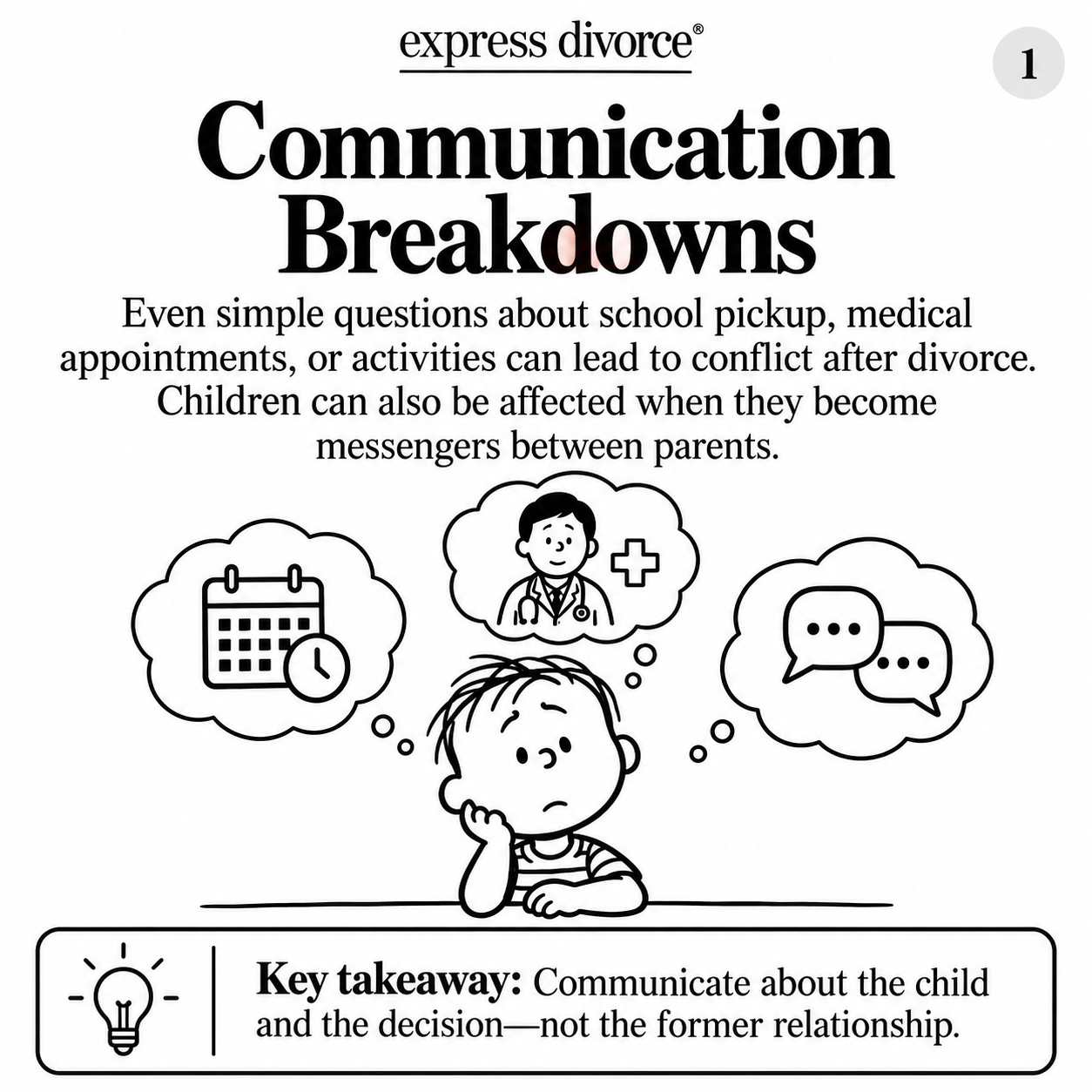
1. Communication Breakdowns
The Challenge
Communication often becomes more difficult after separation.
Even simple questions about school pickup, medical appointments, extracurricular activities, or vacation dates can become sources of conflict when messages are emotional, vague, or mixed with unresolved marital grievances.
Children can also be affected when they become messengers between parents or feel responsible for relaying information.
A More Structured Approach
Keep parenting communication focused on the children and the issue that actually needs to be resolved.
Instead of revisiting the history of the relationship, communicate about specific topics:
schedules and exchanges;
school and activities;
medical care;
travel;
expenses; and
decisions requiring the other parent’s participation.
Where communication is difficult, email, text, or a co-parenting application can help create a clear written record and reduce misunderstandings.
A useful message is usually brief, factual, and action-oriented.
For example:
“The school conference is Thursday at 3:30 p.m. Please let me know by Tuesday whether you plan to attend.”
That is more productive than combining the scheduling issue with criticism about past behavior.
Key takeaway: Communicate about the child and the decision—not the former relationship.
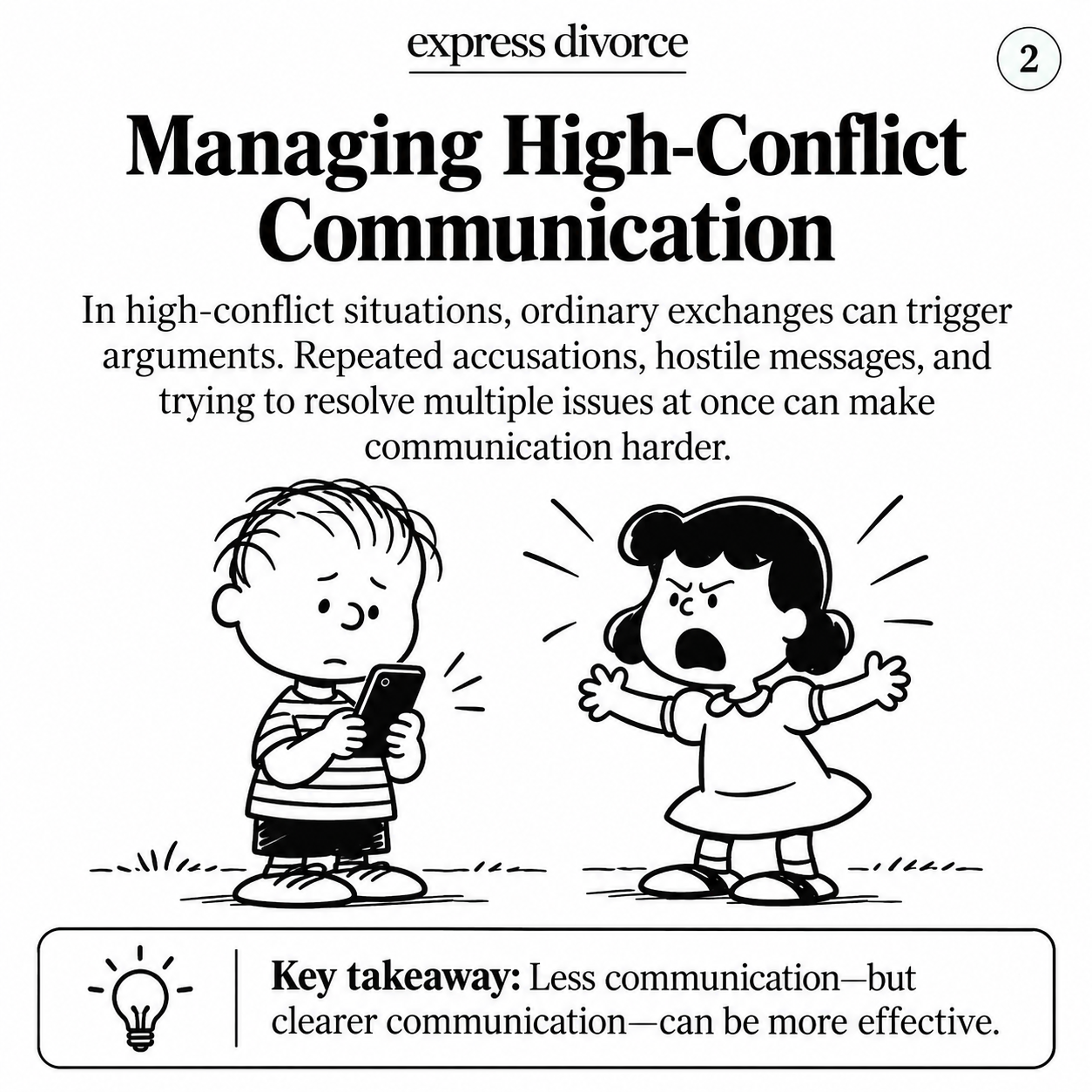
2. Managing High-Conflict Communication
The Challenge
In a high-conflict situation, even ordinary parenting exchanges can trigger lengthy arguments.
Repeated accusations, hostile messages, immediate responses, and attempts to resolve several unrelated disputes at once can make communication harder rather than more effective.
Create More Structure
When conflict is persistent, structure can be more useful than frequent communication.
Consider:
communicating in writing when appropriate;
addressing one issue at a time;
avoiding insults, accusations, and commentary about motives;
identifying exactly what response is needed;
allowing reasonable time to respond when there is no emergency; and
preserving important communications.
You do not need to respond to every provocative statement simply because it was sent.
If a message contains one legitimate parenting question surrounded by personal criticism, respond to the parenting question.
For example:
“I received your message. I agree to the 5:00 p.m. exchange on Sunday.”
Nothing more may be necessary.
Where direct communication is unsafe because of domestic violence, coercion, intimidation, or another serious concern, different arrangements may be appropriate. Safety should take priority over cooperative communication. New York courts expressly consider domestic violence when determining a child’s best interests.
Key takeaway: In high-conflict parenting, less communication—but clearer communication—can sometimes be more effective.
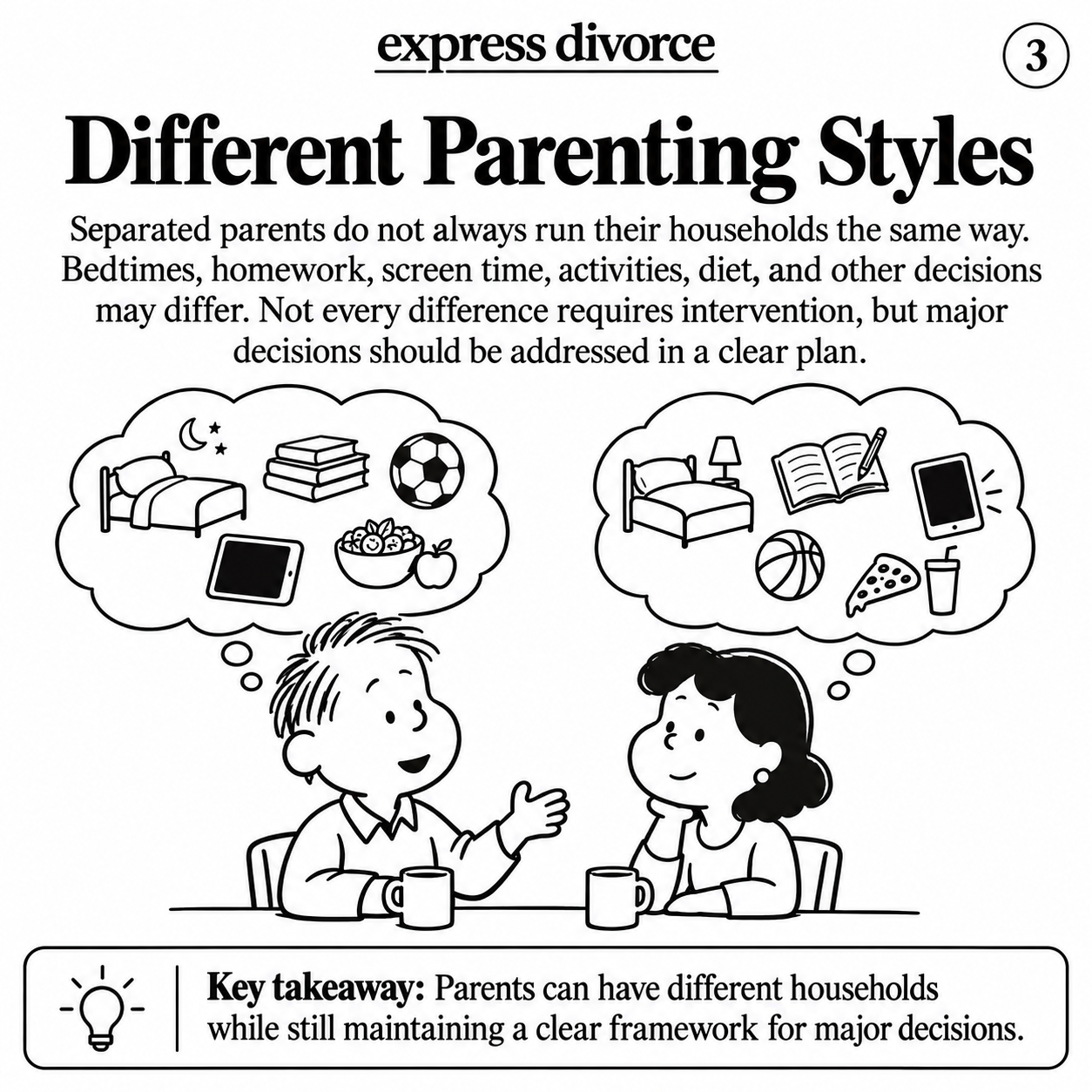
3. Different Parenting Styles
The Challenge
Separated parents do not always run their households the same way.
Bedtimes may differ. One parent may be stricter about homework. The other may allow more screen time. Parents may disagree about extracurricular activities, diet, religion, medical treatment, or education.
Not every difference requires intervention.
The more important question is which decisions are significant enough that the parents need a clear agreement about how they will be made.
Use a Detailed Parenting Plan
A parenting plan can address both decision-making and the practical schedule.
New York Courts explains that mediation can help parents create their own parenting plan and address issues such as schedules, holidays, communication, decision-making, extended family, and new partners.
A comprehensive plan may address regular parenting time, holidays and school breaks, summer vacation, education, non-emergency medical and mental-health care, religion, extracurricular activities, transportation and exchanges, travel, communication between the parents, and communication between a child and the other parent.
The objective is not necessarily to make both homes identical. It is to reduce uncertainty about the issues that are important enough to require agreement.
Key takeaway: Parents can have different households while still maintaining a clear framework for major decisions.
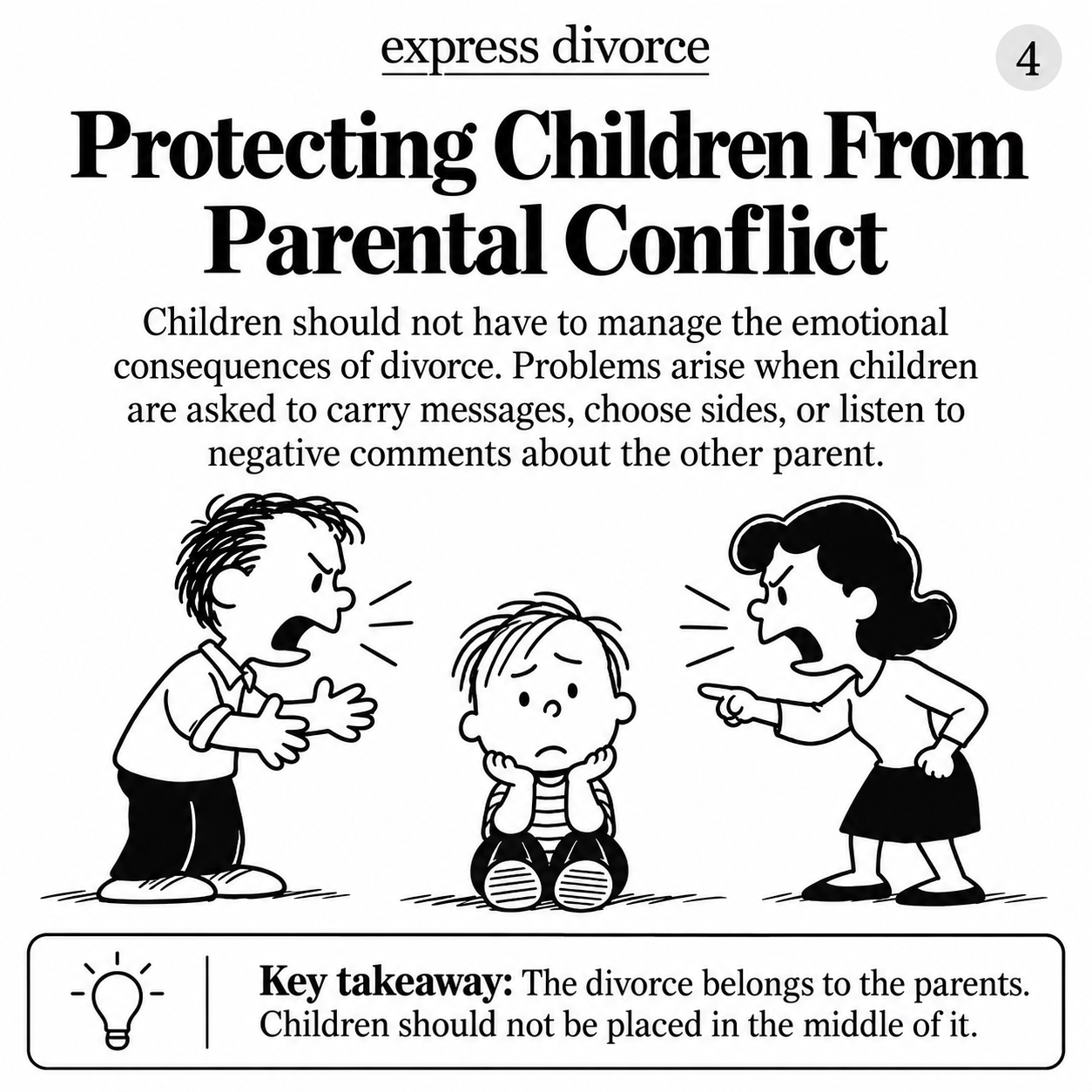
4. Protecting Children From Parental Conflict
The Challenge
Children should not have to manage the emotional consequences of their parents’ divorce.
Problems arise when children are asked to carry messages, choose sides, report on the other parent’s household, or listen to negative comments about the other parent.
Even when parents strongly disagree with each other, the child has a separate relationship with each parent.
Keep Adult Conflict Between Adults
Whenever appropriate and safe, avoid:
criticizing the other parent in front of the child;
questioning the child about the other household;
making the child deliver money, documents, or hostile messages;
discussing litigation details with the child;
asking the child to choose between parents; or
using parenting time as leverage in unrelated financial disputes.
New York courts consider a number of factors when determining a child’s best interests, including each parent’s ability to cooperate with the other and encourage an appropriate relationship between the child and the other parent when it is safe to do so.
Children also benefit from knowing what to expect. A predictable school-week schedule, clear exchange arrangements, and established holiday routines can reduce uncertainty.
Key takeaway: The divorce belongs to the parents. Children should not be placed in the middle of it.
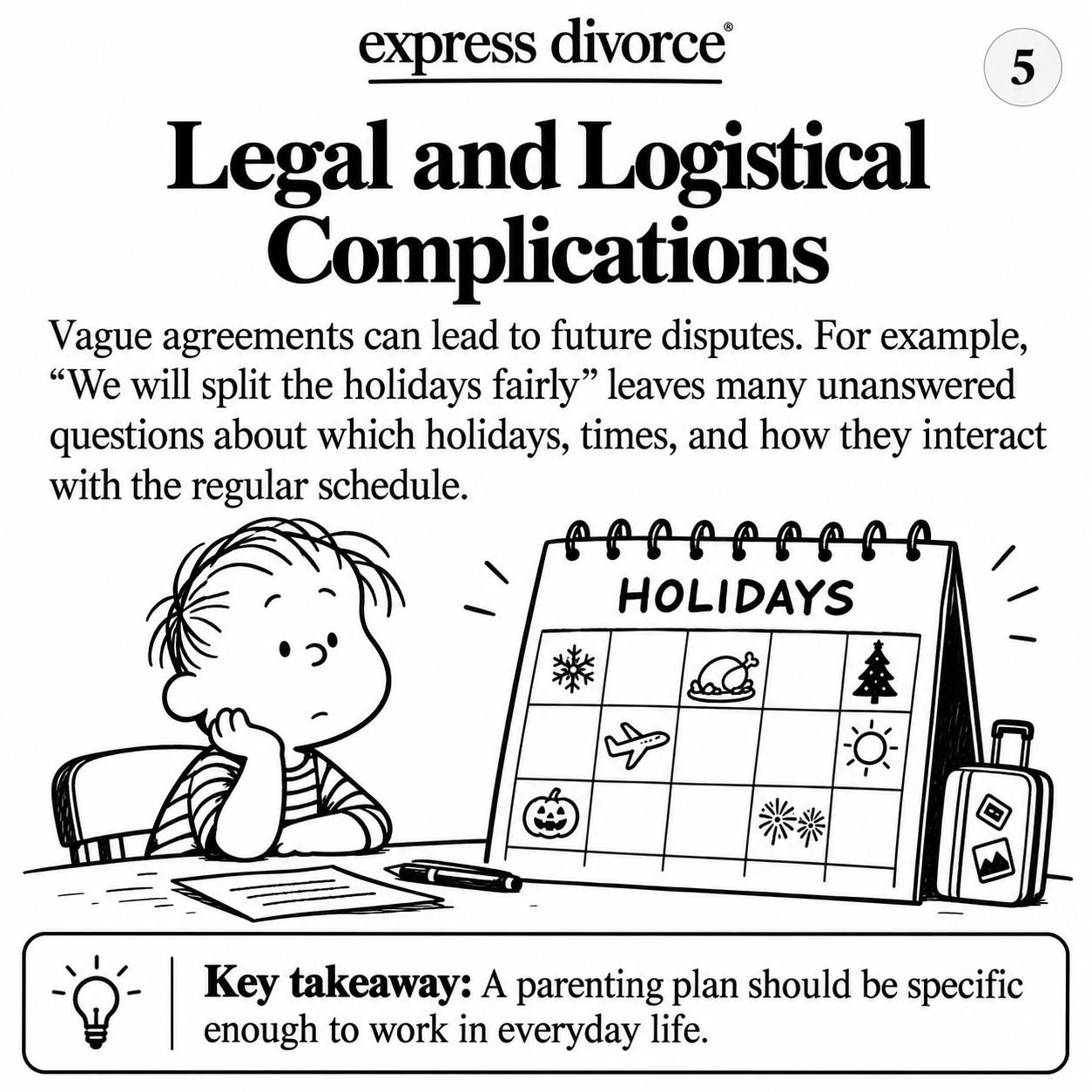
5. Legal and Logistical Complications
The Challenge
Co-parenting becomes more complicated when expectations are vague.
Parents may believe they have agreed, but later discover that they understood the agreement differently.
For example:
“We will split the holidays fairly” leaves many unanswered questions.
Which holidays? Does Thanksgiving alternate annually? What time does Christmas Eve begin? Who has winter break? What happens when a holiday conflicts with the regular weekend schedule?
Specific terms can prevent future disputes.
Put Important Terms in Writing
An effective parenting plan should be clear enough that both parents can understand what is supposed to happen without having to renegotiate the arrangement every week.
If parents reach agreement through mediation, the mediator can help document the parenting plan. In New York court-connected custody mediation, the mediator does not decide what the plan should be; the parents make those decisions. If an agreement is reached and approved by the judge, it may become a court order.
If parents cannot agree, the court may ultimately determine custody and parenting time based on the child’s best interests.
Key takeaway: A parenting plan should be specific enough to work in everyday life.
Can Mediation Help With Co-Parenting Disagreements?
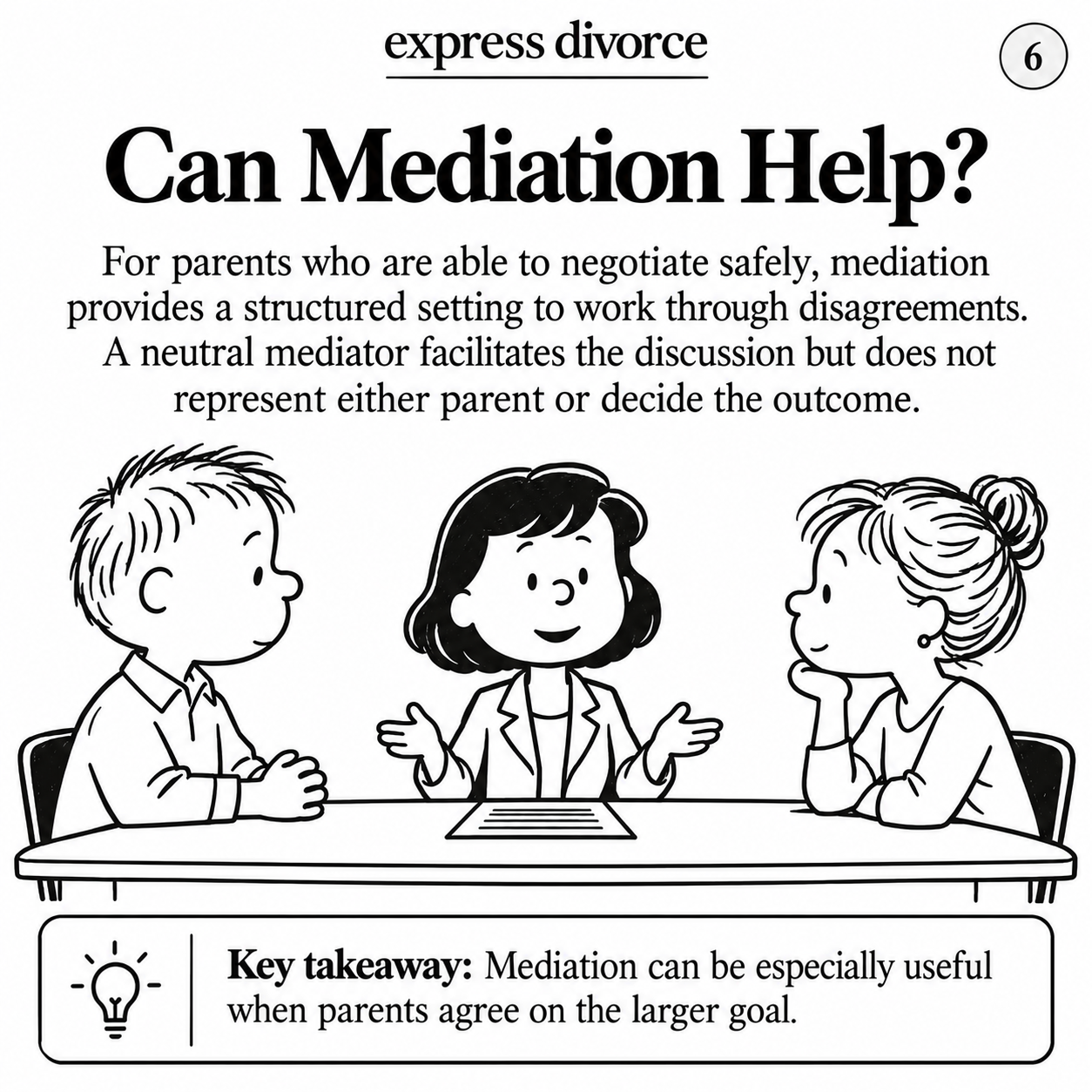
For parents who are able to negotiate safely, mediation can provide a structured setting for working through disagreements.
A neutral mediator facilitates the discussion but does not represent either parent or decide the outcome.
New York Courts describes custody and parenting-time mediation as a voluntary process that can address legal and non-legal issues affecting children. Parents may discuss schedules, holidays, communication, decision-making, and other family concerns.
Mediation can be especially useful when parents agree on the larger goal but need help resolving a limited number of details.
It is not appropriate for every family, particularly where safety, abuse, intimidation, or an extreme imbalance of power makes meaningful negotiation impossible.
What If Parents Already Have a Custody Order?
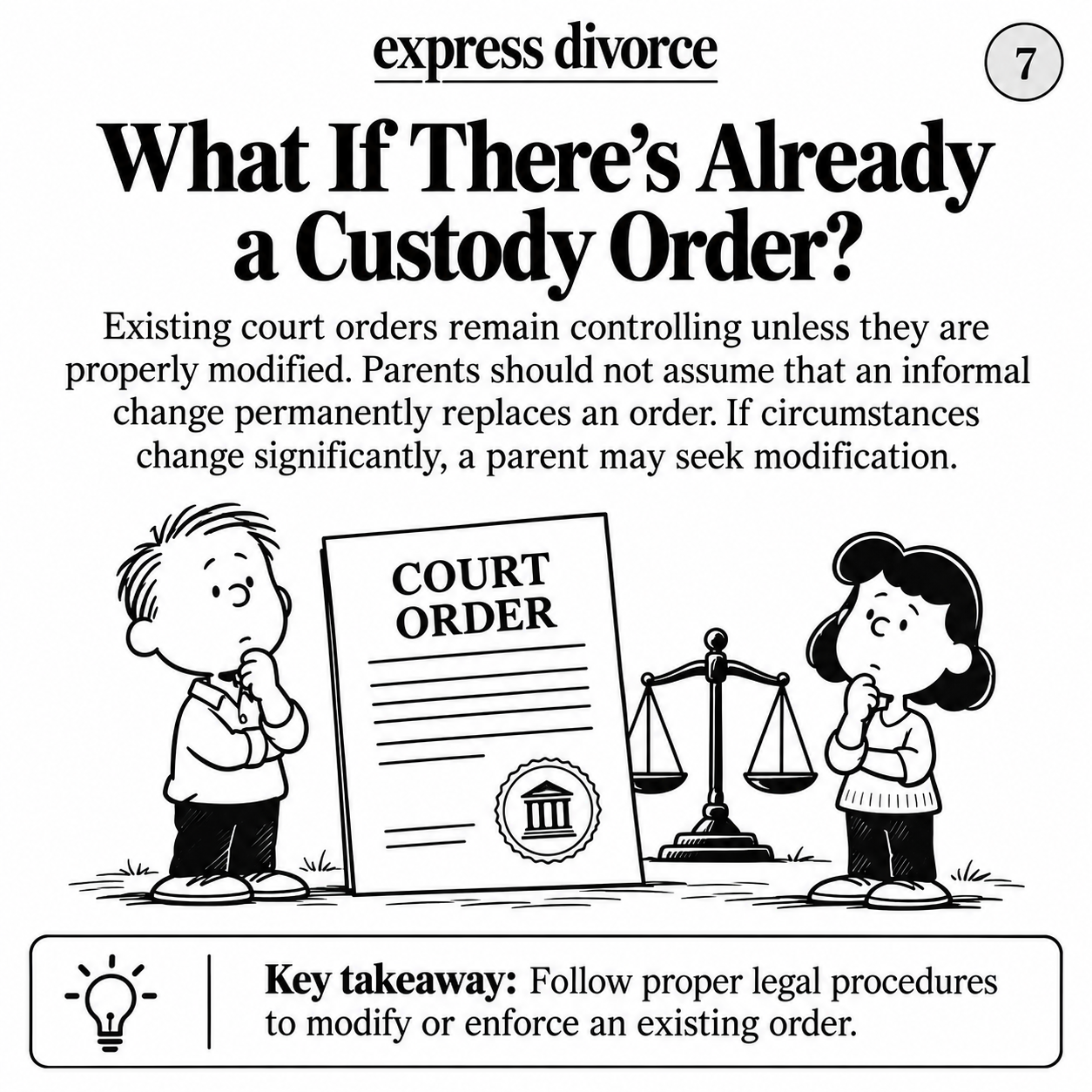
Existing court orders remain controlling unless they are properly modified.
Parents should not assume that an informal change permanently replaces an existing custody or parenting-time order.
If circumstances change significantly, a parent may seek modification. New York Courts provides procedures for requesting modification or enforcement of existing custody and visitation orders.
If both parents want to change an arrangement, documenting the new terms properly can help avoid later disputes about what was agreed.
Co-Parenting and an Uncontested New York Divorce
Having children does not automatically make a divorce contested.
Parents can still pursue an uncontested divorce when they agree on the parenting and financial issues that must be addressed.
For a divorce involving children, that commonly means reaching clear terms regarding:
legal custody and decision-making;
parenting time;
holidays and vacations;
child support;
childcare;
unreimbursed medical expenses; and
other child-related provisions.
Where the parents agree, custody can be entered on consent without a contested custody hearing.
The quality of the agreement matters. A vague parenting arrangement may technically reflect agreement today while creating conflict later.
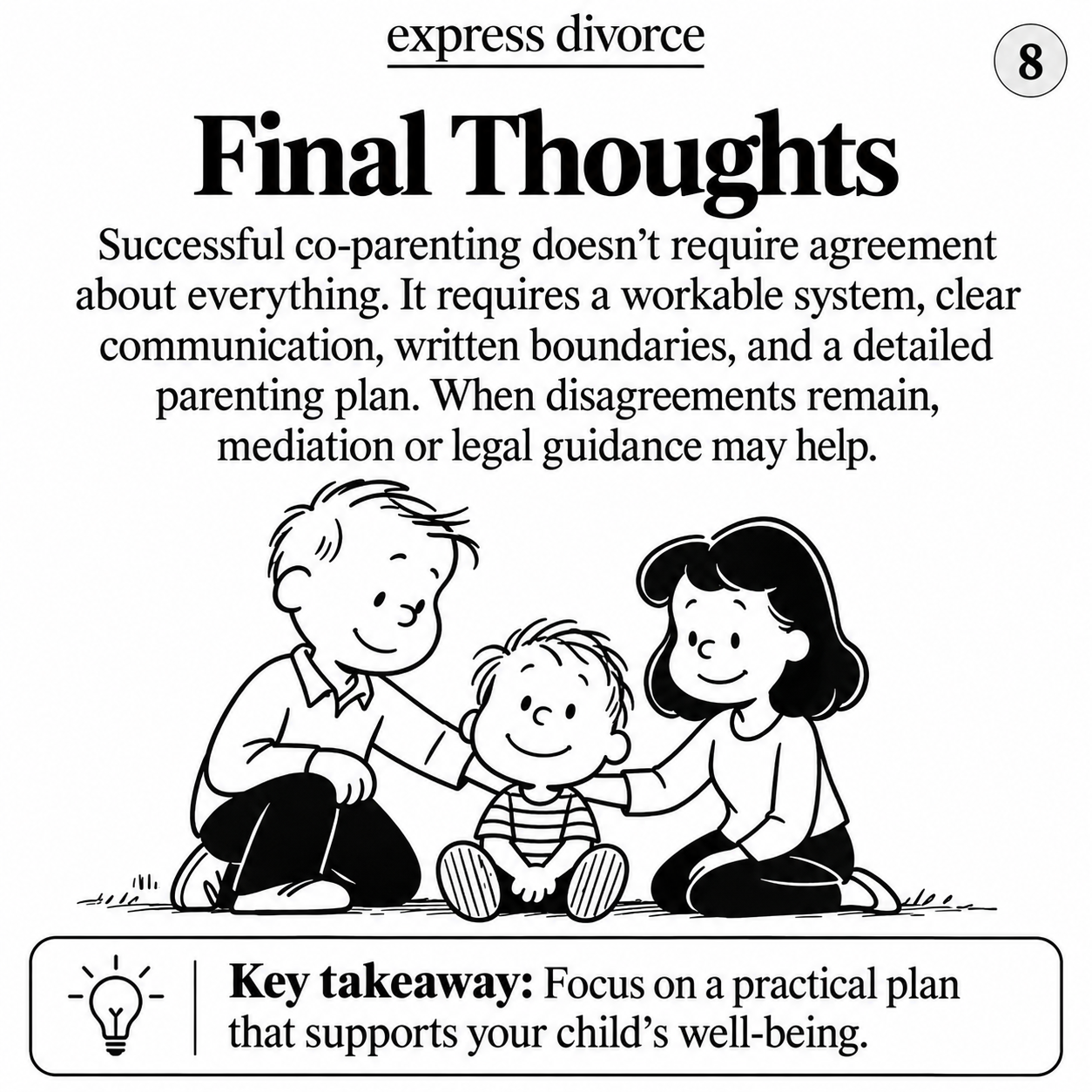
Final Thoughts
Successful co-parenting does not require former spouses to agree about everything.
It requires a workable system.
Clear communication can reduce misunderstandings. Written boundaries can make high-conflict interactions more manageable. A detailed parenting plan can provide predictability. And keeping children outside adult disputes can protect them from unnecessary stress.
When disagreements remain, mediation or legal guidance may help parents move from general intentions to specific, workable terms.
For qualifying New York uncontested divorces involving children, Express Divorce’s Family Package provides attorney-supported review of parenting arrangements, child support, the settlement agreement, and filing strategy.
Building a Parenting Plan?
Use the Express Divorce New York Parenting Plan Generator to organize parenting schedules, holidays, decision-making, communication, transportation, and other terms you may want to discuss before finalizing your agreement.