
Divorce Made Easier.
A simpler, faster way to get divorced in New York.
When you and your spouse agree, getting divorced shouldn’t be complicated.
Express Divorce makes the uncontested divorce process easier — with straightforward steps, clear pricing, and the experience of a New York matrimonial law firm behind you.
See if you qualify in just a few minutes.
Marital Property in New York: What You Should Know
When you marry, your financial life can become more interconnected than you may realize.
Income earned during the marriage, property purchased while married, retirement contributions, investments, real estate, and even increases in the value of certain assets may become relevant if the marriage later ends.
In New York, the first question is not simply, “Whose name is on the asset?” The more important question is usually whether the property is legally considered marital property or separate property.
That classification matters because New York is an equitable distribution state. Marital property may be divided between the spouses, while separate property generally remains with the spouse who owns it.
Understanding that distinction before negotiating a divorce settlement can help prevent expensive mistakes.
What Is Marital Property in New York?
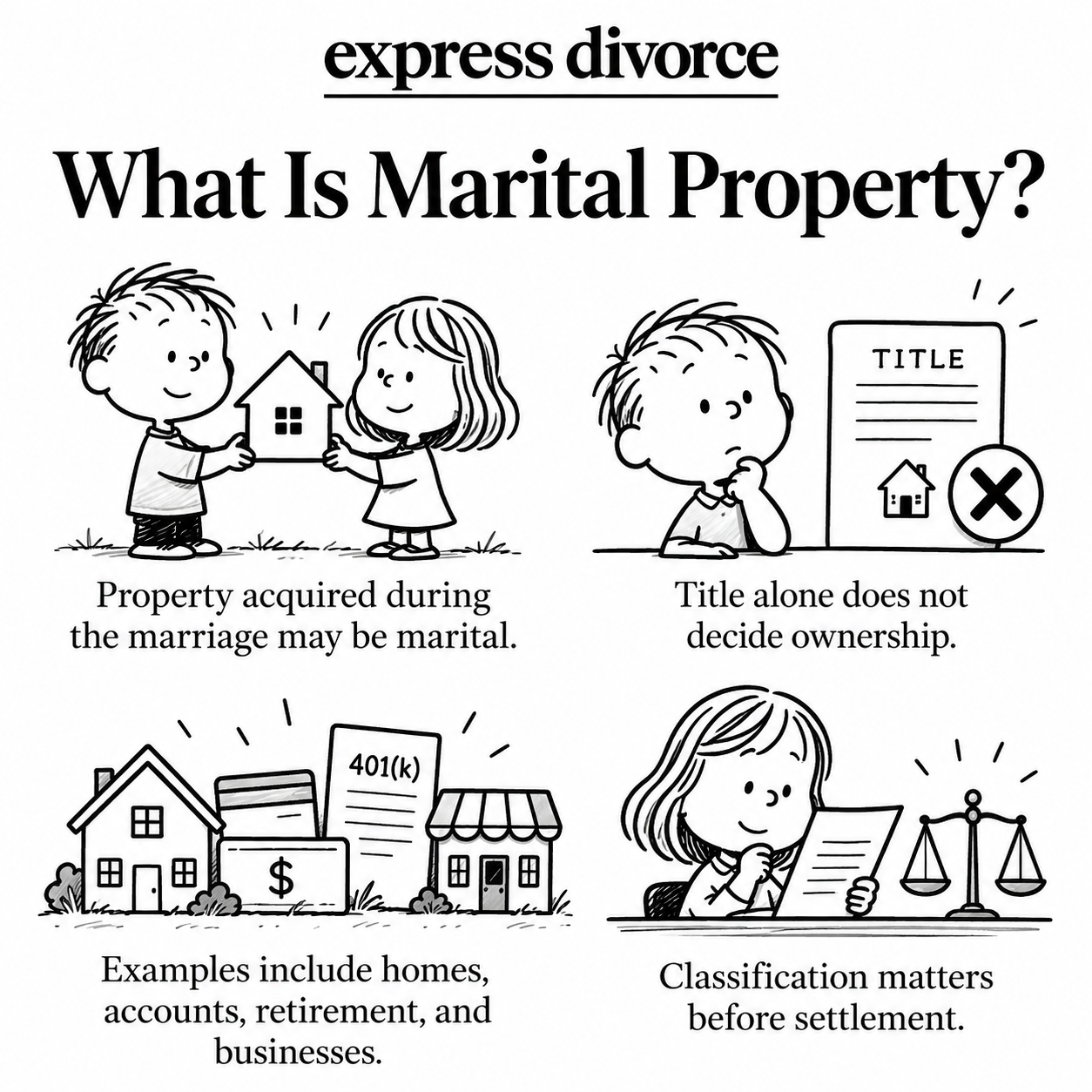
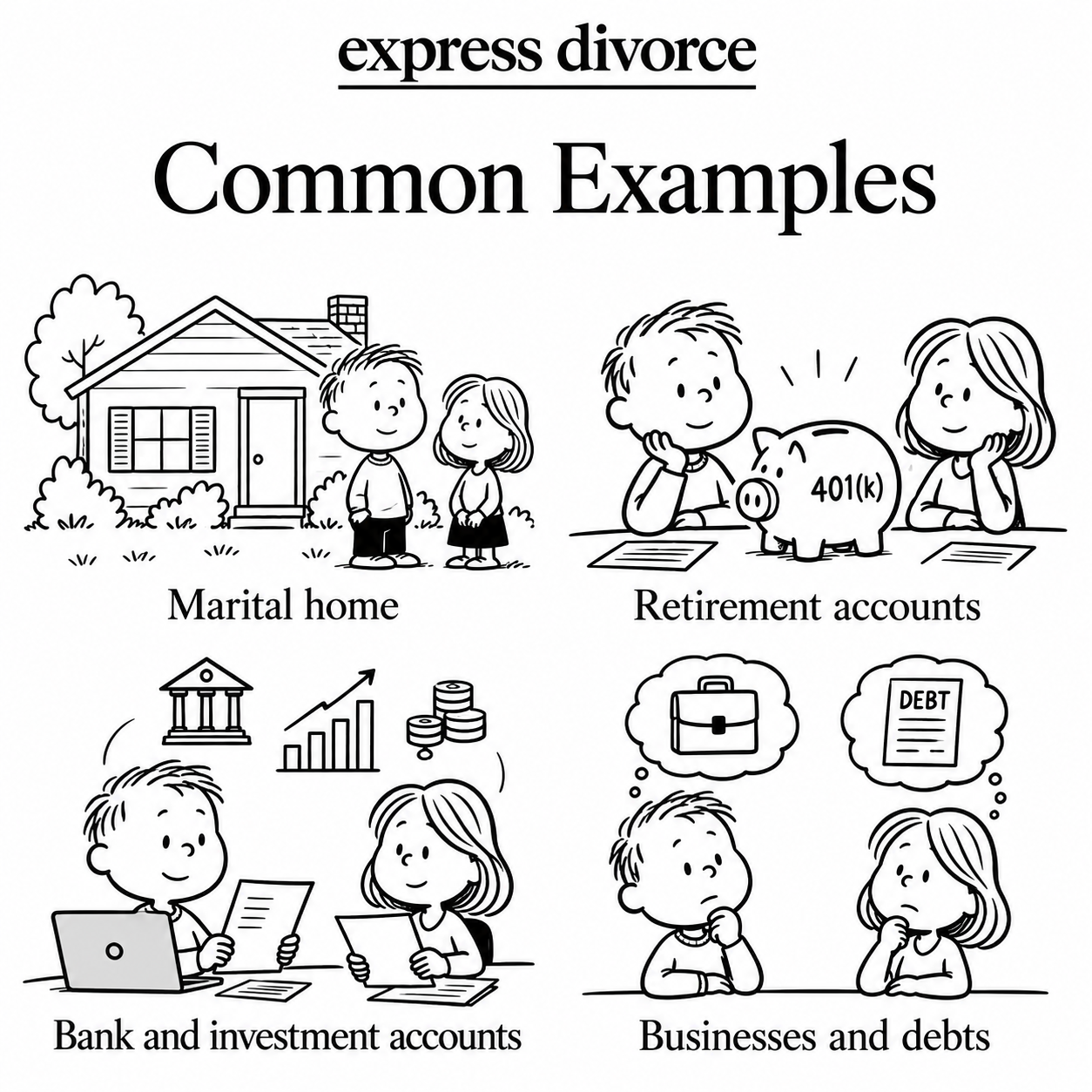
Under New York Domestic Relations Law § 236, marital property generally includes property acquired by either or both spouses during the marriage and before the execution of a separation agreement or commencement of the matrimonial action, regardless of whose name appears on the title.
That can include:
real estate;
bank accounts;
investment accounts;
retirement benefits earned during the marriage;
businesses and professional interests;
vehicles;
valuable personal property; and
other assets acquired during the marriage.
New York Courts specifically notes that property purchased during the marriage may be marital property even if it is titled in only one spouse’s name. Pension and retirement benefits earned during the marriage may also be marital property.
Title Does Not Control the Analysis
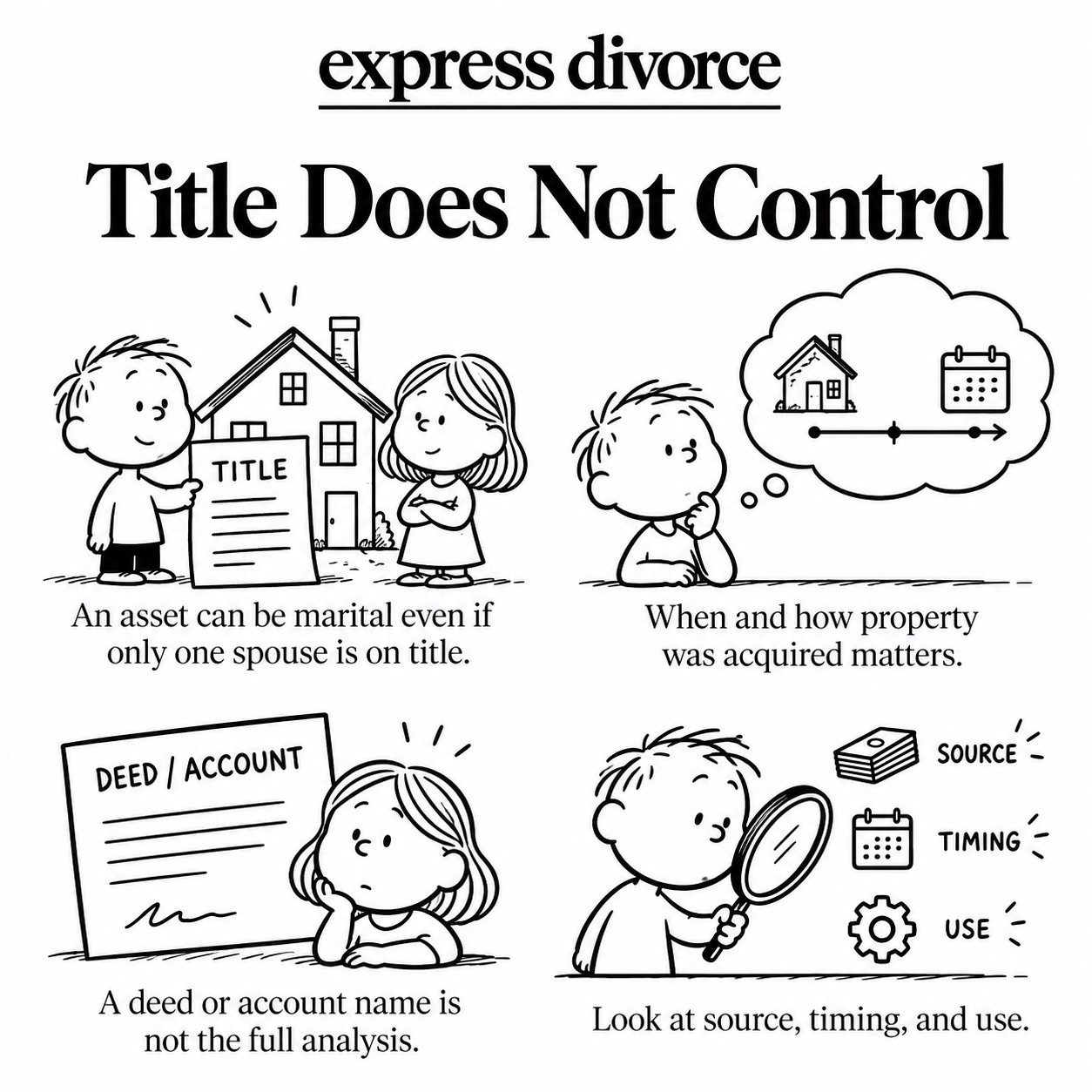
A common misconception is that an asset belongs exclusively to the spouse whose name appears on it.
That is not necessarily true.
For example, if one spouse buys a home during the marriage using marital earnings and places the property only in that spouse’s name, the home may still be marital property.
The same principle can apply to investment accounts, savings accounts, retirement benefits, and other property.
Key takeaway: In New York, when and how property was acquired generally matters more than whose name appears on the account or deed.
What Is Separate Property?
New York law identifies several categories of separate property.
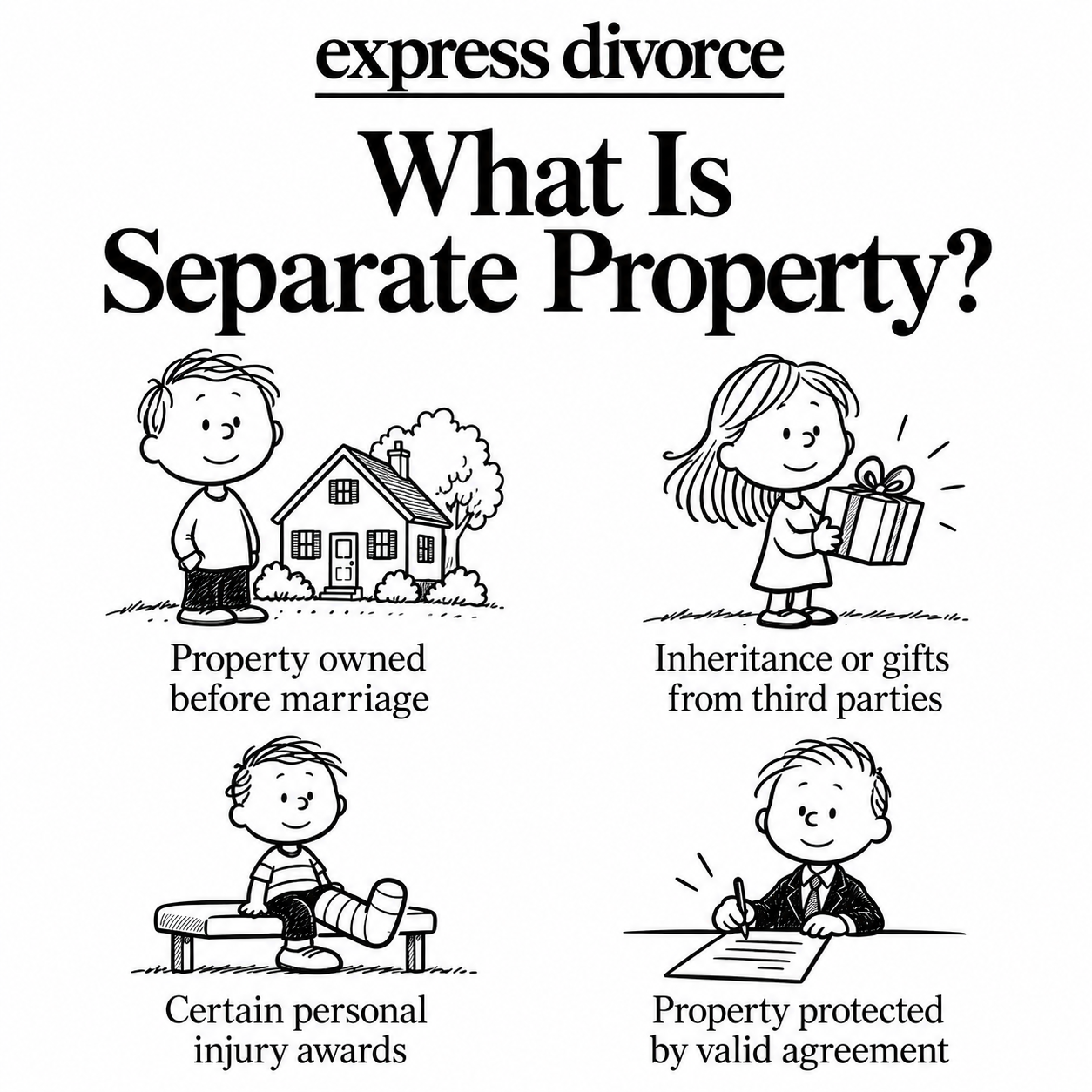
Separate property may include:
property owned before the marriage;
property received by inheritance;
gifts from someone other than the spouse;
compensation for personal injuries;
property received in exchange for separate property;
certain increases in value of separate property; and
property designated as separate by a valid written agreement.
Separate property generally remains separate and is not divided through equitable distribution.
However, determining whether property has remained separate is not always straightforward.
Why Timing Matters
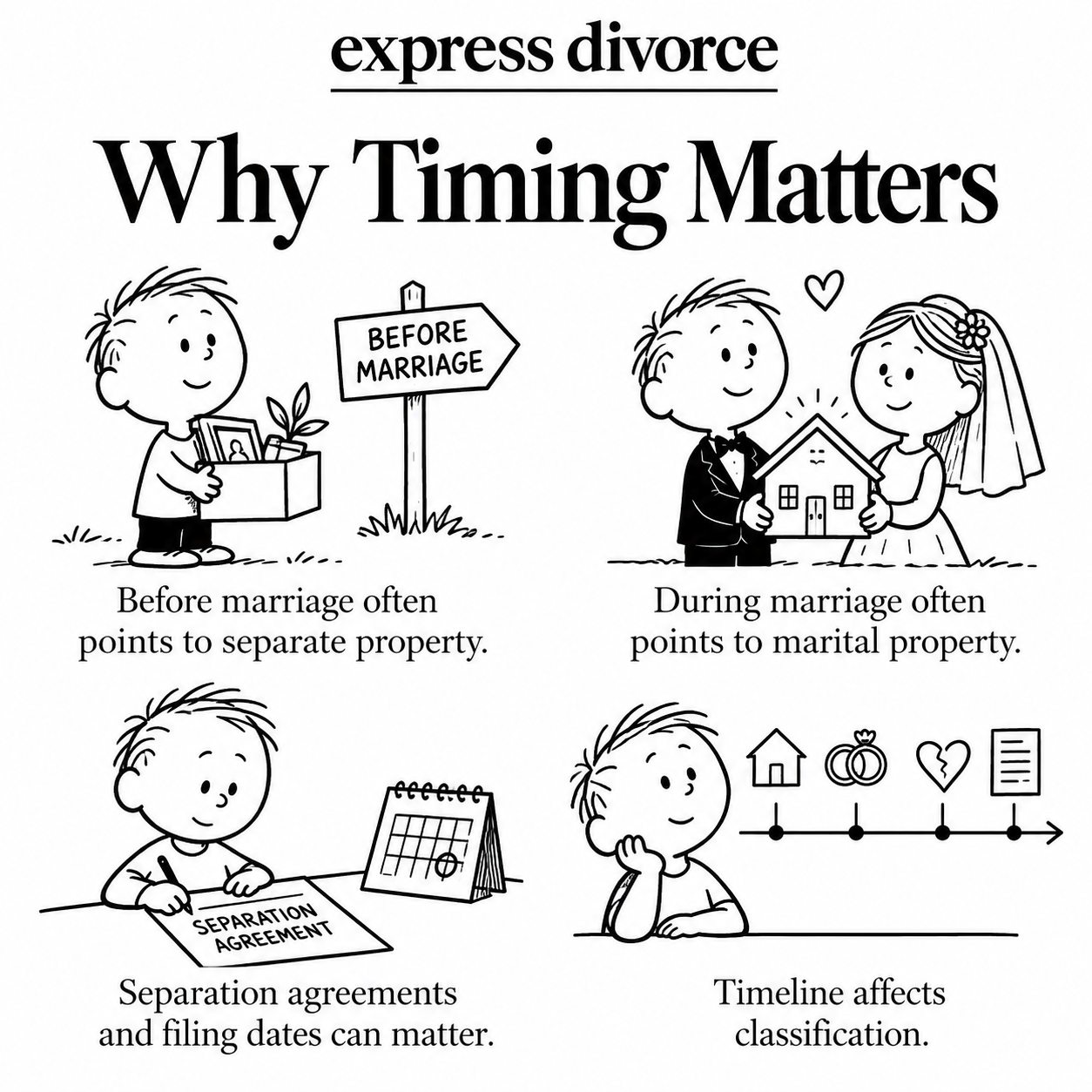
Timing is central to property classification in New York.
Property acquired before marriage is generally separate property.
Property acquired during the marriage and before the applicable statutory cutoff is generally presumed marital unless the spouse claiming separate ownership can prove otherwise. Recent New York appellate decisions continue to apply that presumption.
This means the relevant timeline may include:
when the asset was originally acquired;
whether it was acquired before or during the marriage;
whether a separation agreement was executed; and
when the matrimonial action was commenced.
Key takeaway: Property classification can depend on both the source of the asset and when it was acquired.
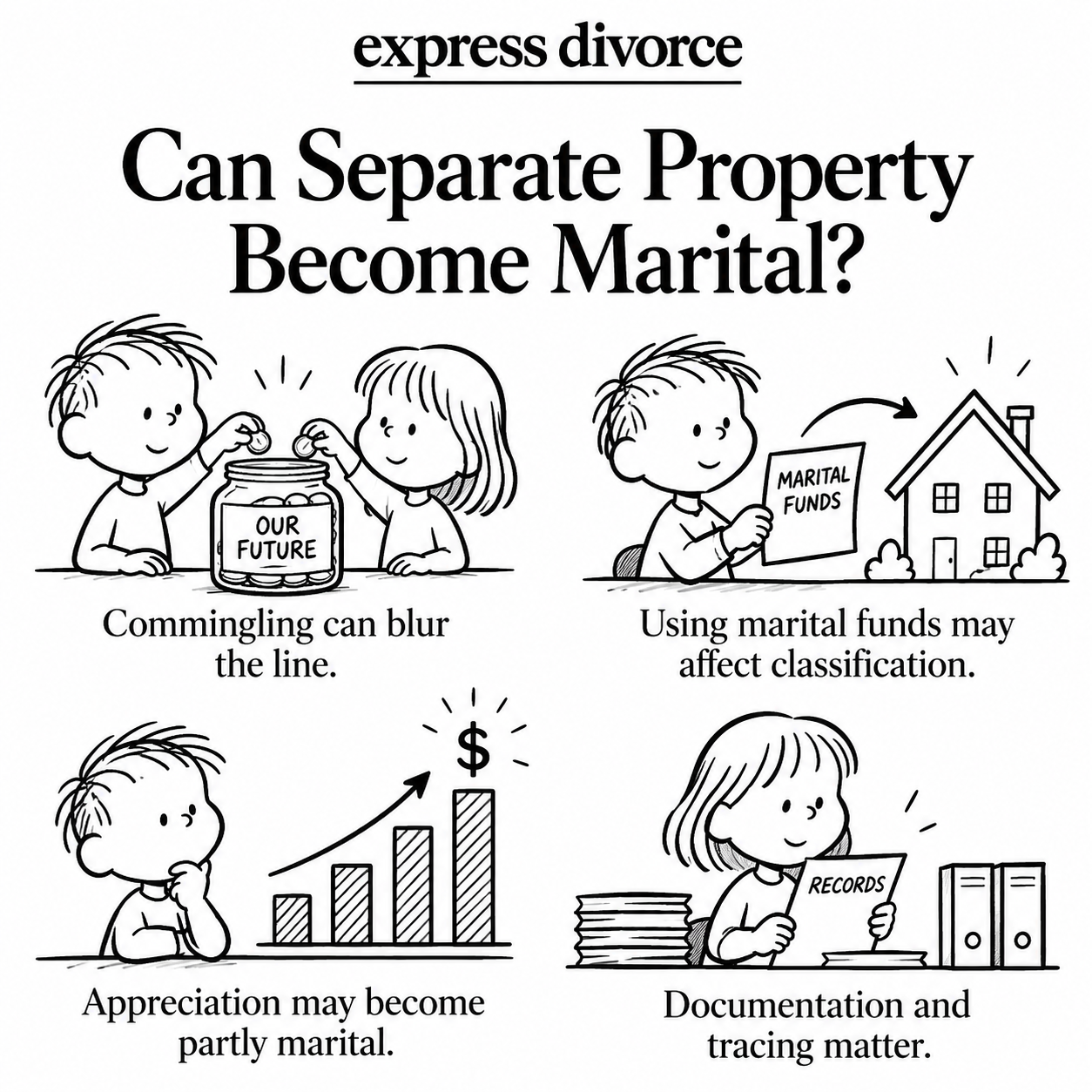
Can Separate Property Become Marital?
Sometimes.
New York courts recognize that separate property can lose its separate character depending on what the spouses do with it. Recent appellate authority reiterates that separate property may be transformed into marital property when the owner’s conduct demonstrates an intent to change its character.
One common issue is commingling.
Commingling Separate and Marital Funds
Suppose one spouse receives an inheritance and deposits the money into a joint account that is then used for ordinary marital expenses.
Depending on the circumstances and the ability to trace the funds, determining what remains separate may become more difficult.
Keeping separate assets clearly documented and traceable can therefore be very important.
Using Marital Funds on Separate Property
A home owned before marriage may remain separate property, but that does not necessarily mean every increase in value is separate.
If the other spouse’s direct or indirect efforts contribute to the appreciation of separate property, part of that increase in value may be treated as marital property. New York law expressly recognizes this exception.
Appreciation of Separate Property
Appreciation is one of the more complicated areas of New York equitable distribution.
If an asset increases in value because of passive market forces, that appreciation may remain separate.
But if the non-owning spouse contributes directly or indirectly to the asset’s increased value, some of that appreciation may become marital property.
For example, contributions can include helping operate a business, improving property, providing homemaking or parenting services that enabled the other spouse to develop an asset, or otherwise facilitating its growth. New York appellate courts continue to recognize both direct and indirect contributions in this analysis.
What About Gifts Between Spouses?
New York law treats gifts from third parties differently from gifts between spouses.
A gift from someone other than the spouse may qualify as separate property.
A transfer or gift between spouses, however, should not automatically be assumed to remain separate. Its treatment may depend on the facts, the nature of the transfer, and any governing agreement.
This is an area where documentation matters.
Retirement Accounts and Pensions
Retirement assets frequently contain both marital and separate components.
Contributions or benefits earned before marriage may be separate.
The portion earned or accrued during the marriage may be marital and subject to equitable distribution. New York Courts expressly recognizes pension and retirement benefits earned during the marriage as marital property.
Dividing certain retirement accounts may also require additional documents, such as a Qualified Domestic Relations Order or other plan-specific order.
For that reason, retirement assets should not be waived or divided casually.
What About the Marital Home?
The marital home often raises several separate questions:
Is the property marital, separate, or mixed?
Was it acquired before or during the marriage?
Were marital funds used to pay the mortgage?
Were improvements made during the marriage?
Did the property appreciate?
Was separate property contributed toward the purchase?
Does one spouse plan to keep the home?
Will refinancing be required?
A home can contain both marital and separate interests.
Its treatment depends on the facts—not simply whose name appears on the deed.
New York Does Not Use Community Property Rules
New York is not a community property state.
Instead, New York applies equitable distribution.
That means marital property is divided in a manner the court considers equitable after reviewing the circumstances of the marriage and the statutory factors. Equitable does not necessarily mean equal.
The court may consider factors including:
each spouse’s income and property;
the length of the marriage;
the spouses’ ages and health;
the needs of a custodial parent;
maintenance;
direct and indirect contributions to marital property;
tax consequences;
dissipation of assets; and
other circumstances the court considers just and proper.
New York courts also recognize nonfinancial contributions such as homemaking, parenting, and supporting the other spouse’s career.
How to Protect and Document Separate Property
If you believe an asset is separate property, documentation can be extremely important.
Consider keeping:
statements showing ownership before marriage;
closing documents;
inheritance records;
gift documentation;
account statements tracing separate funds;
proof of the source of purchase funds;
records showing improvements or contributions; and
valid prenuptial or postnuptial agreements.
Avoid assuming that keeping an asset in one name automatically preserves its separate character.
The spouse asserting that property acquired during the marriage is separate may bear the burden of proving that separate-property claim.
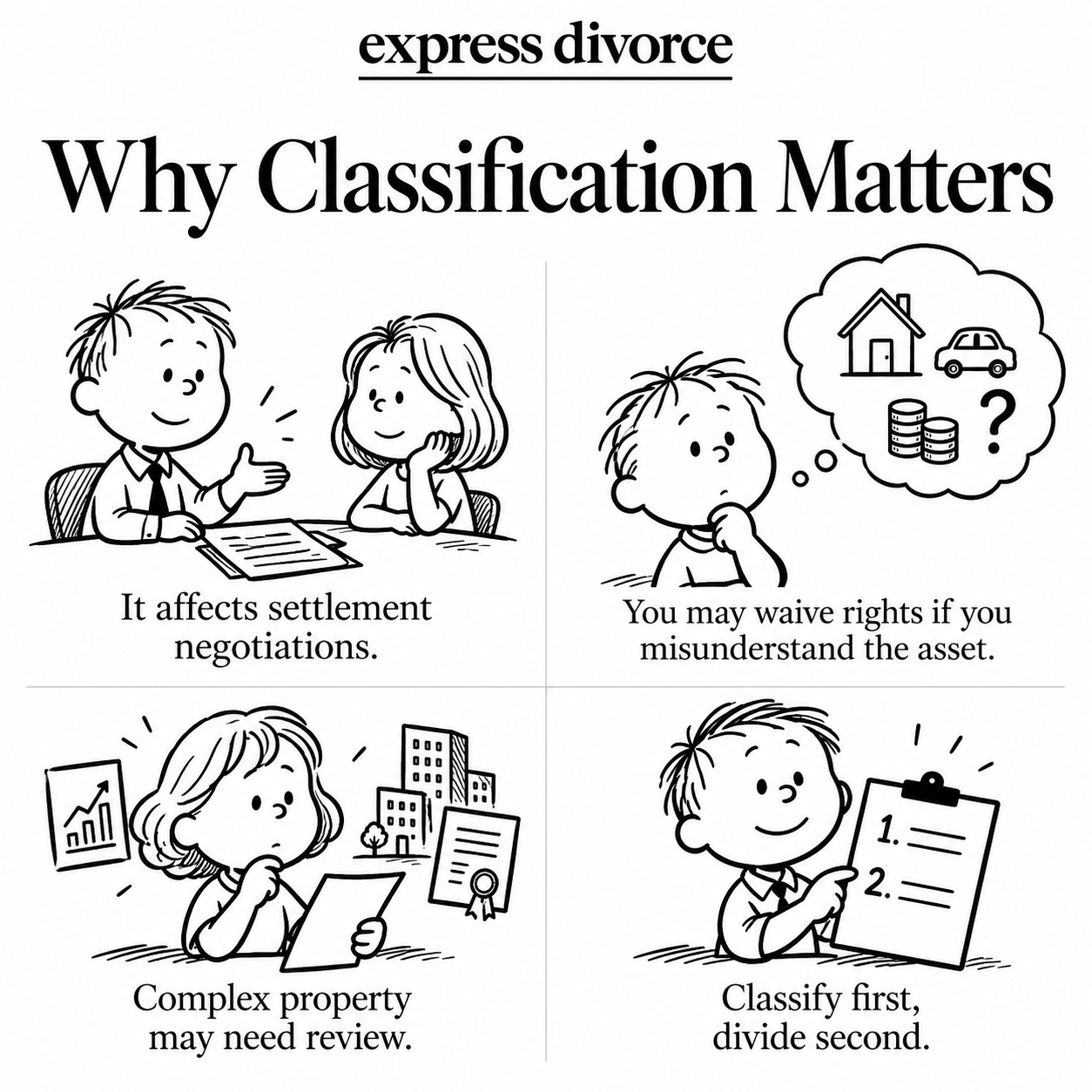
Why Classification Matters in an Uncontested Divorce
Even when spouses agree on how they want to divide their property, they should still understand what they are agreeing to.
A settlement might provide that:
one spouse keeps the home;
retirement accounts are divided;
bank accounts remain with the current owner;
one spouse buys out the other’s interest in property;
debts are allocated between the spouses; or
particular separate-property claims are recognized or waived.
If the classification is misunderstood, a spouse may unknowingly waive a valuable interest.
That is why more complicated property issues may warrant attorney review even in an uncontested divorce.
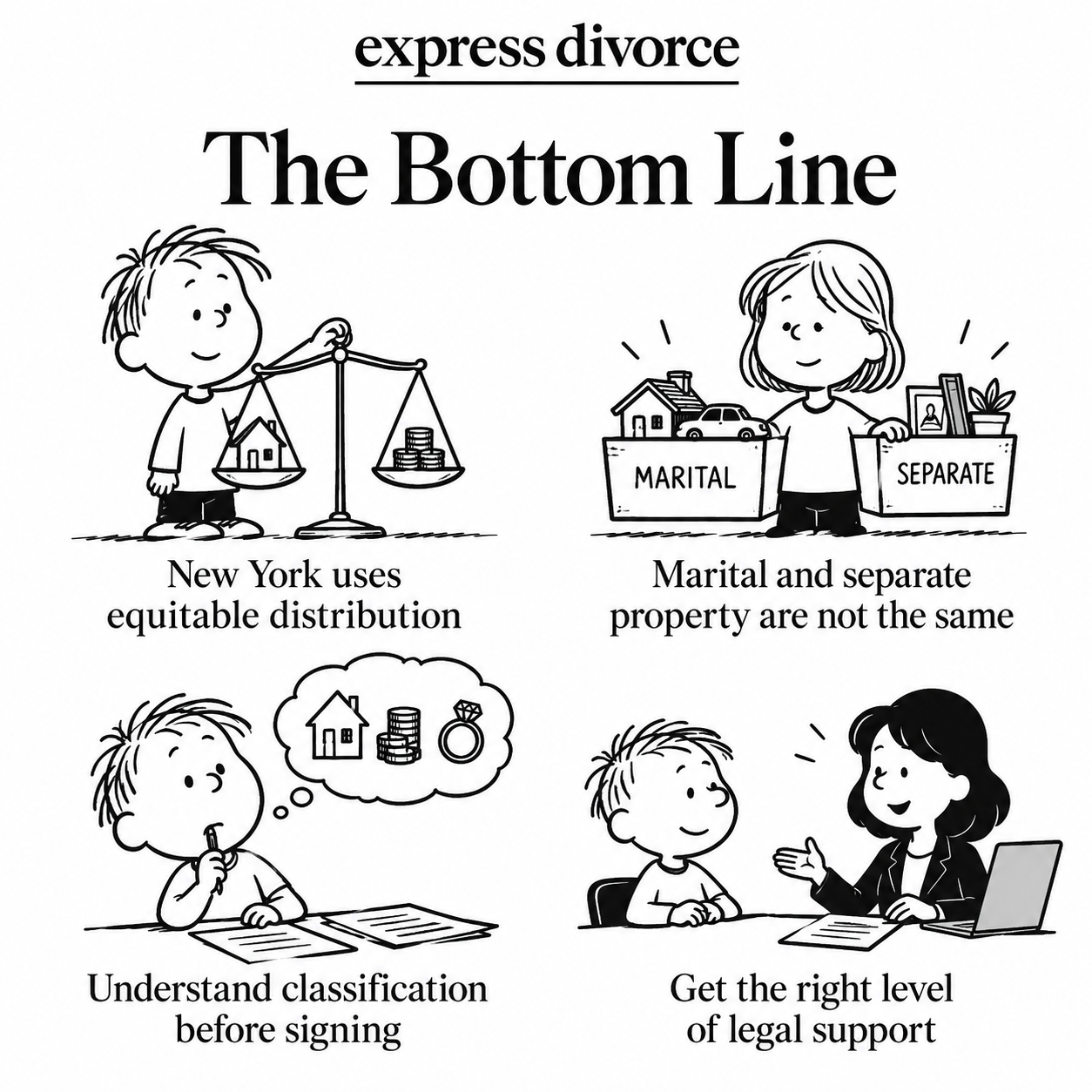
The Bottom Line
In New York, property division begins with classification.
The first question is whether an asset is marital property, separate property, or contains elements of both. Only after that can the parties meaningfully decide how the property should be divided.
New York does not automatically divide marital property 50/50. The governing standard is equitable distribution—fair division based on the circumstances of the marriage and the parties.
If you and your spouse have already reached agreement, Express Divorce can help with qualifying New York uncontested divorces at different levels of support, from guided document preparation to attorney review and full representation.
Marital Property FAQs
Is a house I bought before marriage automatically separate property?
Property owned before marriage is generally separate property in New York. However, issues may arise if marital funds were used toward the property or if the other spouse’s efforts contributed to appreciation during the marriage.
Are retirement accounts divided in a New York divorce?
The portion earned or accrued during the marriage may be marital property and subject to equitable distribution. A premarital portion may remain separate.
Does an asset stay separate just because it is only in my name?
No. Title alone does not determine whether property is marital or separate. Property acquired during the marriage may be marital regardless of whose name appears on the asset.
Can separate property lose its separate character?
Yes. Depending on the circumstances, commingling or conduct showing an intention to transform separate property into marital property can affect classification.
Is marital property divided 50/50 in New York?
Not automatically. New York uses equitable distribution, which means marital property is divided fairly based on statutory factors and the circumstances of the case.
What happens to debt in a New York divorce?
Debt can also be allocated as part of equitable distribution. Whether a particular obligation is treated as marital or separate can depend on when it was incurred, its purpose, and the circumstances surrounding it. The fact that a debt is in one spouse’s name does not necessarily answer how responsibility will be allocated between the spouses.
Should I get attorney review if we already agree on the property division?
It can be particularly useful where the divorce involves real estate, retirement accounts, businesses, significant separate-property claims, commingled assets, or other complex property issues.
For a qualifying uncontested matter, the appropriate level of professional review depends on the complexity of the property involved and how much legal assistance you want.